 Back
Back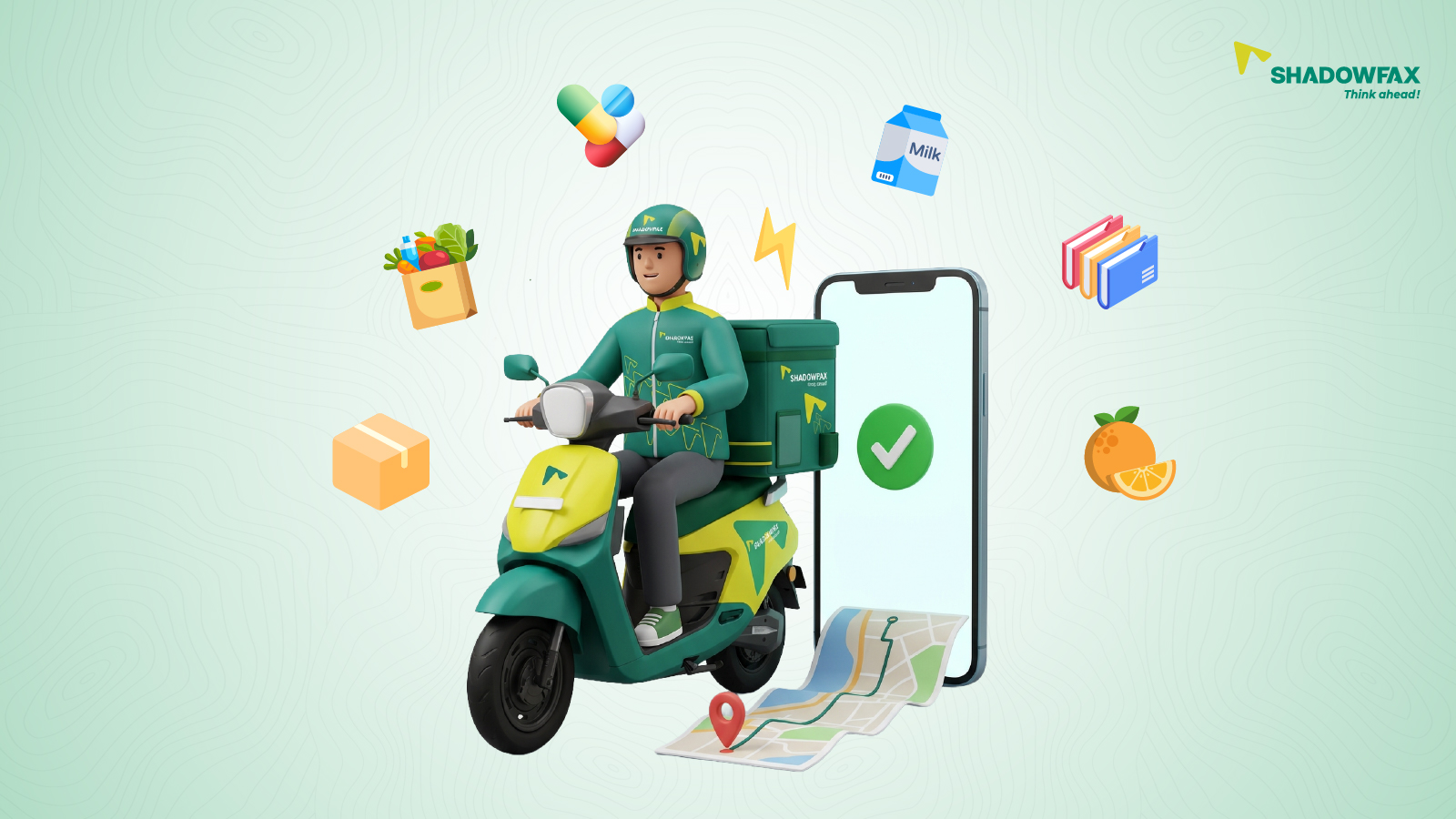


From groceries in 10 minutes to medicines at the doorstep, hyperlocal delivery in India has fundamentally changed what customers expect from businesses, and speed is no longer a premium offering but the new standard. India's hyperlocal delivery market has grown at a 51.84% CAGR between FY2021 and FY2025.
For businesses, this shift is an opportunity, as dark stores, kirana partnerships, and growing digital adoption across Tier-II and Tier-III cities have enabled the construction of fast, reliable fulfillment operations at scale without the complexity of traditional supply chains.
At Shadowfax, we have seen this shift reshape entire categories, from groceries and pharma to fashion and electronics. This guide covers how hyperlocal delivery works in India, the models driving it, and how your business can use it to meet demand, improve customer experience, and witness exceptional growth.
Hyperlocal delivery is a fulfillment model built on proximity, where orders are picked up from nearby stores within a specific locality or pin code and delivered directly to the customer without the need for distant warehouses or long supply chains.
Fulfillment happens from vendors already closest to the customer, whether that is a neighborhood pharmacy, a grocery store down the street, or a restaurant on the next block. The shorter distance translates directly into faster delivery times, fresher products, and lower last-mile costs.
For businesses, hyperlocal delivery is a powerful growth opportunity that drives revenue, strengthens customer retention, and builds a competitive edge that is difficult to replicate. Local retailers, MSMEs, and neighborhood brands that leverage nearby inventory to fulfill orders within minutes or hours are better positioned to meet rising customer demands while reducing operational costs and delivery timelines.
Rather than playing catch-up with large e-commerce platforms, forward-thinking businesses can use hyperlocal delivery to scale smartly, deepen market presence, and turn their local footprint into a long-term strategic asset. The ability to deliver faster, serve better, and operate leaner is what sets thriving local businesses apart in today's demand-driven market.
Businesses using hyperlocal fulfillment consistently report higher repeat-purchase rates because when a customer gets their order in 30 minutes, they order again.

Hyperlocal delivery leverages technology and logistics to deliver services quickly. Orders are matched in real time to nearby delivery agents, tracked through hyperlocal delivery apps and GPS, and delivered directly to customers for quick, efficient service. Here's the step-by-step process:
Step 1: Customer Places Order: A customer opens an app or website, browses products from a nearby store, and places their order in just a few taps.
Step 2: Order Goes to the Nearest Location: The system automatically identifies the closest store or fulfillment center that has the ordered items in stock.
Step 3: Store Confirms and Packs: The store staff receives an instant notification, picks the items from the shelves, and packs the order for pickup.
Step 4: Delivery Partner Picks Up: A nearby delivery agent is assigned to the order, heads to the store, and collects the packed package for dispatch.
At Shadowfax, delivery agents are assigned via proprietary smart routing that optimizes paths in real time, reducing failed deliveries and improving ETAs.
Step 5: Fast Delivery to the Customer: The delivery agent takes the most efficient route to the customer's location and delivers the package within minutes or a few hours, depending on traffic conditions.
The entire chain is built for speed, eliminating long-distance shipping and multi-day wait times in favor of quick, local fulfillment.
Hyperlocal delivery operates under various business models, each with its own strengths and challenges. The main ones are single-store, store pickup, hybrid model, and aggregator models. Understanding these helps businesses improve delivery and better serve customers. Here are the main hyperlocal models:
A marketplace-driven model where the platform connects customers with local sellers without owning inventory. The platform manages ordering, payments, and often delivery logistics, while sellers focus on product preparation or stocking. Revenue is typically earned through commissions per order.
Examples: Swiggy, Zomato.
A model where the company owns and manages inventory through dark stores or micro-warehouses located near customers. The business controls stock, pricing, packaging, and delivery operations. This ensures better speed and quality control but requires higher operational investment.
Examples: Blinkit, Zepto.
A combination of owned inventory and partner store sourcing. Products are fulfilled either from company-operated warehouses or local retail partners. This increases flexibility, improves product availability, and reduces stock-out risks while balancing cost and control.
Examples: Amazon Fresh, BigBasket.
A speed-focused model where orders are fulfilled immediately after placement, typically within minutes or under an hour. It is designed for urgent customer needs and relies on real-time dispatch and rapid last-mile execution. Pricing is generally premium due to the logistics intensity.
Examples: Swiggy Genie, Porter (intra-city instant delivery services).
A recurring revenue model where customers pay a monthly or annual fee for benefits such as free deliveries, faster shipping, priority access, or exclusive offers. It increases customer retention, order frequency, and predictable revenue for the business.
Examples: Amazon Prime, Zepto Pass.
Shadowfax powers the last-mile delivery layer for multiple models, from aggregators like Swiggy to inventory-based players like Zepto. If you're building or scaling any of these models, Shadowfax's hyperlocal network plugs directly into your operations.

Hyperlocal delivery and traditional last‑mile delivery represent two distinct approaches to fulfilment, each shaping how businesses meet customer expectations. Such as,
Traditional last-mile delivery often covers hundreds of kilometers, while hyperlocal delivery operates within a small radius, usually under ten kilometers.
Traditional models take two to seven days to complete, whereas hyperlocal delivery ensures same-day fulfilment or delivery within hours.
Traditional delivery emphasizes broad coverage and cost efficiency. Hyperlocal delivery prioritizes speed, freshness, and immediate convenience.
Traditional delivery is best for non-urgent items such as books or clothing. Hyperlocal delivery is designed for food, healthcare products, and daily supplies.
Traditional delivery requires patience from customers. Hyperlocal delivery caters to urgency, meeting the demand for instant service.
By fulfilling orders from nearby locations, businesses significantly reduce delivery timelines, enabling customers to receive products within minutes or hours.
Operating within a limited service radius reduces fuel consumption, shortens transit time, and improves last-mile efficiency.
Shorter delivery windows preserve the quality of perishable goods and reduce the risk of spoilage or returns.
Reliable and time-bound deliveries strengthen brand credibility and encourage repeat purchases.
The model integrates neighborhood retailers into digital commerce, expanding market access without requiring large infrastructure investments.
Hyperlocal delivery is industry-agnostic but delivers the greatest impact in sectors where speed and convenience directly influence purchase decisions
Speed and freshness go hand in hand in the food and grocery retail industry. Hyperlocal delivery enables temperature-controlled handling that protects product quality and builds lasting customer loyalty.
In the pharmacy and healthcare sectors, timely delivery is a key business differentiator. Hyperlocal partners deploy verified riders to ensure medicines and healthcare supplies reach customers securely and reliably.
Hyperlocal logistics help e-commerce and local retail businesses compete with larger marketplaces through quick and flexible slot-based deliveries that align with customer convenience.
Across these sectors, hyperlocal delivery drives speed, consistency, and stronger customer relationships.
While hyperlocal delivery offers speed and convenience, maintaining operational efficiency at scale is complex.
Demand spikes during lunch, dinner, weekends, or promotional campaigns can overwhelm delivery capacity. Without intelligent load balancing and backup fleet management, service-level agreements (SLAs) can suffer.
Managing a distributed delivery workforce involves onboarding, training, performance tracking, and retention. High attrition can disrupt service quality and increase operational costs.
In hyperlocal delivery, the system must reflect the exact stock available at each location; otherwise, customers may order items that are actually out of stock, leading to cancellations and loss of trust.
Hyperlocal delivery depends on generating a high volume of orders within a defined area; without sufficient demand density, last-mile costs rise, and margins decline. Long-term profitability requires accurate demand forecasting and careful optimization of service zones.
Begin with products that customers need quickly or purchase regularly, such as groceries, meals, or essential healthcare items. These categories generate consistent demand and make hyperlocal delivery financially viable.
Businesses can either build their own delivery capability or partner with an established hyperlocal logistics provider. Partnering is often more practical in the early stages, as it reduces upfront investment and speeds up market entry.
Successful hyperlocal operations require systems that manage orders, track inventory, efficiently assign deliveries, and provide real-time tracking. The right technology improves operational control, reduces delays, and supports scalable growth.
Shadowfax’s hyperlocal delivery network is operational in over 100 Indian cities, making it one of the largest players in quick-commerce logistics. The focus is on speed, reliability, and scale, helping retailers, MSMEs, and brands meet rising customer expectations for instant service delivery, ideal for same‑day or next‑day fulfilment of food, pharma, and grocery orders.
For businesses scaling hyperlocal delivery, Shadowfax combines advanced technology and reliable networks to turn logistics into your growth engine. Partner with proven expertise to outpace competitors.
Hyperlocal delivery partners are companies like Shadowfax that manage last-mile deliveries within a short radius, handling drivers, routing, and tracking so businesses can offer fast fulfillment without building their own fleet.
Local delivery typically covers a wider city or regional area and may take one to three days, whereas hyperlocal delivery operates within a few kilometers and focuses on same-day or within-hours fulfillment.
Hyperlocal deliveries are usually completed within 30 minutes to two hours, depending on distance and operational capacity, with some models offering even shorter windows.
Time-sensitive, high-frequency items such as food, groceries, medicines, and daily essentials are best suited for hyperlocal delivery because speed directly affects their value to customers.
A great example of a hyperlocal business is Blinkit or Zepto, dark store operators that fulfill grocery and daily essential orders within 10 minutes from micro-warehouses located within 2–3 km of their customers.
Hash Tags :
#shadowfax #hyperlocal #hyperlocaldelivery #10minutesdelivery #doorstepdelivery #supplychains #lastmiledelivery #logistics #fastdelivery #instantdelivery #1hourdelivery #30minutesdelivery
Related Blogs