 Back
Back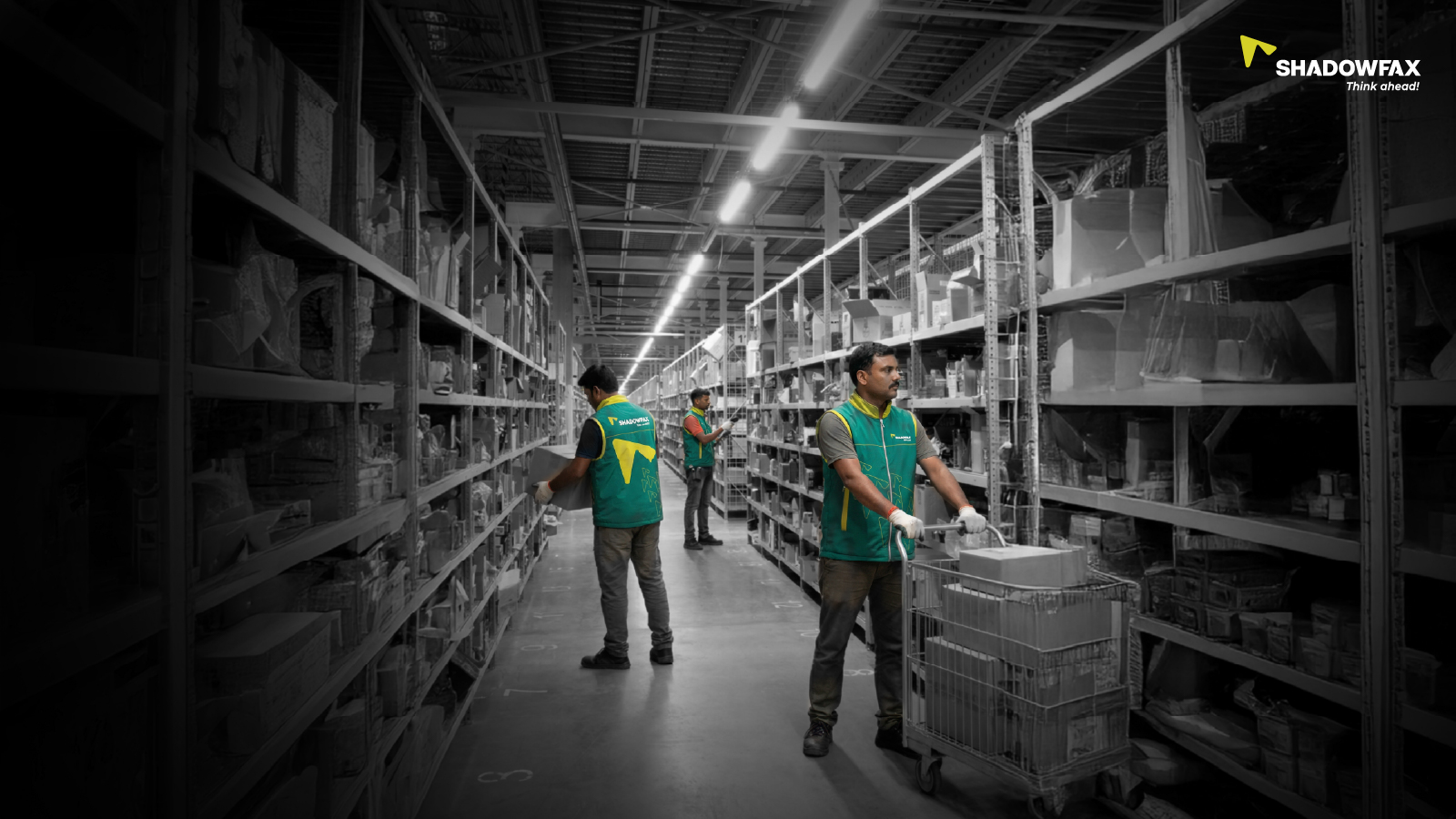


As e-commerce continues to grow, the demand for faster deliveries and greater convenience is also increasing. To meet these consumer expectations, retailers are now turning to dark stores. These stores are located closer to the urban hubs, and hence, they have the capacity to respond rapidly and keep operational costs in control. This momentum is the key reason why the dark store market is growing exponentially. So what is a dark store? And why is it such a critical enabler for quick commerce?
In this article, we will understand what a dark store means, how it operates, how it fulfills last-mile delivery, what advantages it brings to the consumers, and why retailers consider it a great investment strategy.
The dark store is a hyperlocal distribution center that stocks inventory and enables quick, accurate fulfillment for online orders.
Unlike a traditional brick-and-mortar store, a dark store, or dark supermarket, is closed to walk-in customers. It focuses on catering to online orders generated on mobile apps, websites, third-party aggregators, and other online platforms. A dark shop is strategically located in high-demand areas to meet the growing expectation for high-quality products/goods delivered on demand (same-day delivery or sub-hour delivery). The trend of online shopping is growing, and hence, dark store retailers are fulfilling this demand by providing everything the customers need right at their fingertips, with speed, efficiency, and accuracy.
The trend of online shopping in urban and semi-urban localities has increased over the years. Customers with busy and always-online lifestyles prefer to shop online and want the delivery to be fast and convenient. Dark stores fulfill this demand by providing faster deliveries right at the doorstep.
The relationship between customer demand and order fulfillment capability is like a self-reinforcing cycle. Each side strengthens the other, creating rapid growth for quick-commerce and dark-store models.
Besides, technology like AI-based demand forecasting, route optimization, and real-time inventory management systems makes it easy to run dark retail stores effectively.
As a result, dark stores have become extremely popular and a lucrative investment for retailers.
Dark stores and micro fulfillment centers (MFCs) are transforming the future of quick commerce fulfillment by enabling faster and more efficient order processing. While both models focus on rapid delivery, they differ in structure, purpose, and scale. Understanding the difference between a dark store vs warehouse setup helps businesses choose the right fulfillment strategy for modern consumer demands.
A dark store is a retail-style facility designed exclusively for online order fulfillment. These stores are strategically located in urban areas to support ultra-fast deliveries, often within 10–30 minutes. Dark stores resemble supermarkets but are closed to walk-in customers. They are ideal for grocery delivery, instant commerce, and hyperlocal operations.
On the other hand, micro fulfillment centers are highly automated, compact warehouses built to improve inventory accuracy and order efficiency. MFCs use robotics and smart picking systems to process a large volume of orders quickly. They are commonly integrated into existing retail spaces or warehouses to optimize last-mile delivery operations.

The process of order fulfillment, right from receiving an order to making it ready for delivery, happens in minutes. For such quick and efficient execution, dark stores must follow a streamlined process. What does this automated dark store management process look like? Let’s understand
All online orders are first recorded in a centralized management system. The system then assigns this order to a picking staff member.
The picking staff collects all the order items (the store is optimized to make it easy and quick to identify and collect order items) into a trolley or a bag. The picked order is then sent for packaging.
Orders are neatly packed (frozen, delicate, or fragile items are handled accordingly) into presentable and secure packages at the packaging counter. Each package is labelled and prepared for dispatch.
Dark stores either use an in-house dispatch team or a third-party delivery fleet to deliver the packaged items to the customers.
How does the order reach the customer? Is there only store-to-door delivery? Let’s understand
Dark stores have three types of fulfillment models based on customer preference. They are:
A customer orders products online via an app or a website. The order is picked and packed at the dark store. The packed order is delivered to the customer waiting outside the store at a designated area (curbside or a parking lot).
A customer places an order online via an app or a website. The order is picked and packed at the dark store and kept at the pickup counter. The customer picks it up from the pickup counter and heads out in a matter of seconds.
(The most popular order fulfillment method that prioritizes convenience and comfort.)
A customer places an order (on an app or a website). It is picked and packed at the dark store and delivered by an in-house delivery team or a third-party logistics partner to the customer’s doorstep.
An e-commerce fulfillment and retailer brings all the front-end and back-end capabilities needed for a dark store concept to succeed. Vice versa, the dark store model also offers a host of advantages to retail companies. The benefits of dark stores include:
Situated in the heart of high-demand localities, a dark store model allows the retail companies to streamline their operations and offer same-day or sub-hour/instant delivery efficiently.
Unlike grocery stores, supermarkets, and local shops, a dark store does not deal with billing and customer interaction. As a result, a dark store operates efficiently for longer hours with a smaller staff. Hence, online retailers can provide round-the-clock order fulfillment.
Dark stores use digital systems to track stock in real time. This also keeps the retailer’s app/website updated in real time. Customers always see accurate availability, and problems like wrong packaging, order cancellations, and other fulfillment errors are mitigated.
The dark store concept does not involve customer-facing facilities; hence, they save on staff and overheads. The operational costs to run a dark store are much lower than those of a conventional store.
It is easy to scale operations by operating small but hyperlocal dark stores at strategic locations to meet the growing demand. No need to invest in large warehouses or storage facilities. This way, retail businesses can serve a large customer base easily and at scale.
As quick commerce fulfillment expands, businesses are paying closer attention to dark store cost, operational efficiency, and long-term profitability. The initial investment in a dark store typically includes urban real estate, inventory management technology, delivery software, shelving systems, and workforce training. While setup costs may be lower than large-scale warehouses, urban locations and rapid delivery infrastructure can significantly impact operating expenses.
From a fulfillment cost analysis perspective, recurring costs include rent, utilities, staff salaries, inventory carrying costs, and technology maintenance. However, dark stores often reduce expenses associated with traditional retail operations, such as customer-facing staff and in-store merchandising.
Key factors influencing dark store ROI and profitability include:
In terms of quick commerce economics, businesses in densely populated urban areas generally achieve faster break-even periods due to higher delivery volumes and optimized logistics. Many operators also use interactive ROI estimators and cost calculators to evaluate profitability timelines, operational expenses, and expansion feasibility across different city sizes.
Whether a brand operates its own dedicated dark store (omnichannel model) or relies on third-party dark stores that fulfill orders for multiple brands (multichannel/3PL model), this fulfillment approach comes with specific operational challenges. These include:
Setting up dedicated dark stores requires significant capital investment, including buying or renting a storage center, paying utility bills, and maintaining stock, technology, and staff training.
In both omnichannel and multichannel models, managing high volumes of online orders with sophisticated software and coordinating with order packaging and delivery partners can be challenging.
Dark stores are most effective in dense urban areas; rural or remote locations may not see the same benefits.
Dark stores often deal with localized orders; hence, they have less inventory buffer, which makes them sensitive to supply chain fluctuations. If order velocity is high, there might be disruptions in order fulfillment, which directly impacts customer satisfaction and brand reputation.
The dark store is not a universal solution for every online business. Dark stores get the best ROI for businesses that invest heavily in online retail and e-commerce order fulfillment.
However, it may not be the best idea for mid-sized businesses with very little online presence to invest in a dark shop. It does not yield the desired results for them. They may overrun their budgets, and it becomes difficult for them to generate profits. These businesses must invest in solutions that are tailored to their range of products, their customer base, and their markets.
For businesses looking for similar efficiency without establishing full-fledged dark stores, there are several alternatives, like
Best suited for: Ultra-fast delivery and high order density in urban areas
Micro fulfillment centers are small tech-enabled hubs that are located close to high-demand areas. These centers serve as hyperlocal stores for quick pickup and efficient last-mile delivery. The delivery fleet is local, and hence it can traverse the routes quickly. The delivery fleet uses bikes and scooters for same-hour delivery—further cutting down the cost of delivery.
Best suited for: Next-day or same-day delivery with broader product assortments
The urban fulfillment centers are mid-size facilities, located with or near traditional retail stores. They have a broad assortment of products and can process high-volume online orders for same-day or next-day delivery. These stores work with the traditional outlet and are extensively automated for efficient storage, picking, packing, and shipping for online order fulfillment.
Best suited for rapid scaling, geographic expansion, and cost flexibility.
E-commerce businesses partner with third-party logistics (3PL) providers and delegate some or all tasks like warehousing, picking, packing, last-mile delivery, etc. They leverage the network, expertise, and local presence of a third-party fleet for order fulfillment.
Dark stores are transforming modern e-commerce by making online shopping quick and convenient for customers. Online retailers and e-commerce businesses are investing in strategically located, inventory-optimized dark stores and making delivery faster and more efficient. They are catering to real-time demand by prioritizing speed and convenience and by improving last-mile efficiency and scalability.
In this scenario, logistics and last-mile delivery partners like Shadowfax, who specialize in end-to-end hyperlocal fulfillment solutions, have become essential to the quick commerce ecosystem. Shadowfax has hyperlocal networks and trained delivery fleets to move orders from storage to customers within minutes. They bridge the “last lap” and reduce delivery time. Dark stores benefit from their routing efficiency, shipment tracking ability, local networks, and the ability to handle high-frequency orders with ease.
By partnering with Shadowfax, retailers gain speed, reliability, and operational flexibility. Ultimately, they ensure a smoother customer experience and higher satisfaction in a market where convenience and delivery time define competitiveness.
The global dark store market is projected to grow significantly between 2024 and 2030, with estimates suggesting the industry could reach nearly $138.54 billion by 2030. The rise of instant delivery expectations, urban convenience shopping, and evolving quick commerce trends are pushing retailers and logistics companies to invest in faster and more efficient fulfillment models.
Several major e-commerce fulfillment trends are shaping the future of dark stores and quick commerce operations:
The future of retail will depend heavily on speed, convenience, and operational efficiency. Businesses are increasingly using AI optimization tools, smart fulfillment systems, and hyperlocal delivery networks to improve customer experience while reducing delivery costs. Sustainability is also becoming a key priority, with companies focusing on eco-friendly packaging and low-emission delivery methods.
As customer expectations continue to evolve, dark stores are expected to become a central part of modern retail infrastructure, helping brands deliver products faster while maintaining scalability and profitability in highly competitive markets.
A dark store is a fulfillment center designed exclusively for online orders, not walk-in customers. Unlike regular stores, dark stores focus on speed and efficiency of order picking, packing, and delivery. They're located in high-demand urban areas to enable same-day or sub-hour delivery with lower operational costs.
Dark stores typically deliver orders within 10-30 minutes, with some enabling sub-hour or instant delivery. This speed is possible due to their strategic location in dense urban areas, optimized inventory, and streamlined fulfillment processes.
Dark stores primarily stock fast-moving consumer goods, including groceries, pharmacy products, household essentials, personal care items, snacks, beverages, stationery, and cleaning supplies. Some dark stores specialize in specific categories like electronics, beauty, or food delivery.
Dark stores work best for high-volume online retailers with strong delivery demand, particularly in urban areas. Small or mid-sized businesses with limited online presence may find the initial investment too high. Alternatives like micro-fulfillment centers or 3PL partnerships may be better suited for them.
Key challenges include high initial investment, complex operations management, limited delivery radius (mainly urban areas), supply chain sensitivity, and operational complexity. Success requires strategic location selection, technology integration, and effective last-mile logistics partners.
Dark stores use digital inventory management systems with AI-based demand forecasting and real-time tracking. They maintain optimized, limited SKU (stock-keeping units) with a focus on high-velocity products to ensure quick fulfillment and minimize stockouts.
Costs vary by location and scale but include rent, utilities, staff, inventory, and technology systems. While operational costs are lower than traditional retail, the initial setup requires significant capital. ROI typically takes 12-24 months, depending on order density and delivery radius.
Dark stores are most profitable in densely populated urban areas with high order density and short delivery distances. In smaller cities or rural areas, the delivery radius limitations and lower order volumes may make profitability challenging. Alternatives like micro-fulfillment centers may work better.
Dark stores integrate with e-commerce platforms (like Shopify, WooCommerce, Magento) through order management systems (OMS) and APIs. This enables real-time inventory syncing, order routing, and automated fulfillment processes.
Logistics partners like Shadowfax handle last-mile delivery, route optimization, and real-time tracking. They extend the reach of dark stores, handle delivery operations, and enable the speed and reliability that make dark store models successful.
Hash Tags :
#shadowfax #darkstores #darkstore #ecommerce #MFC #retailindustry #logistics #supplychain #hyperlocal #quickcommerce #qcommerce #hyperlocalandquickcommerce
Related Blogs