 Back
Back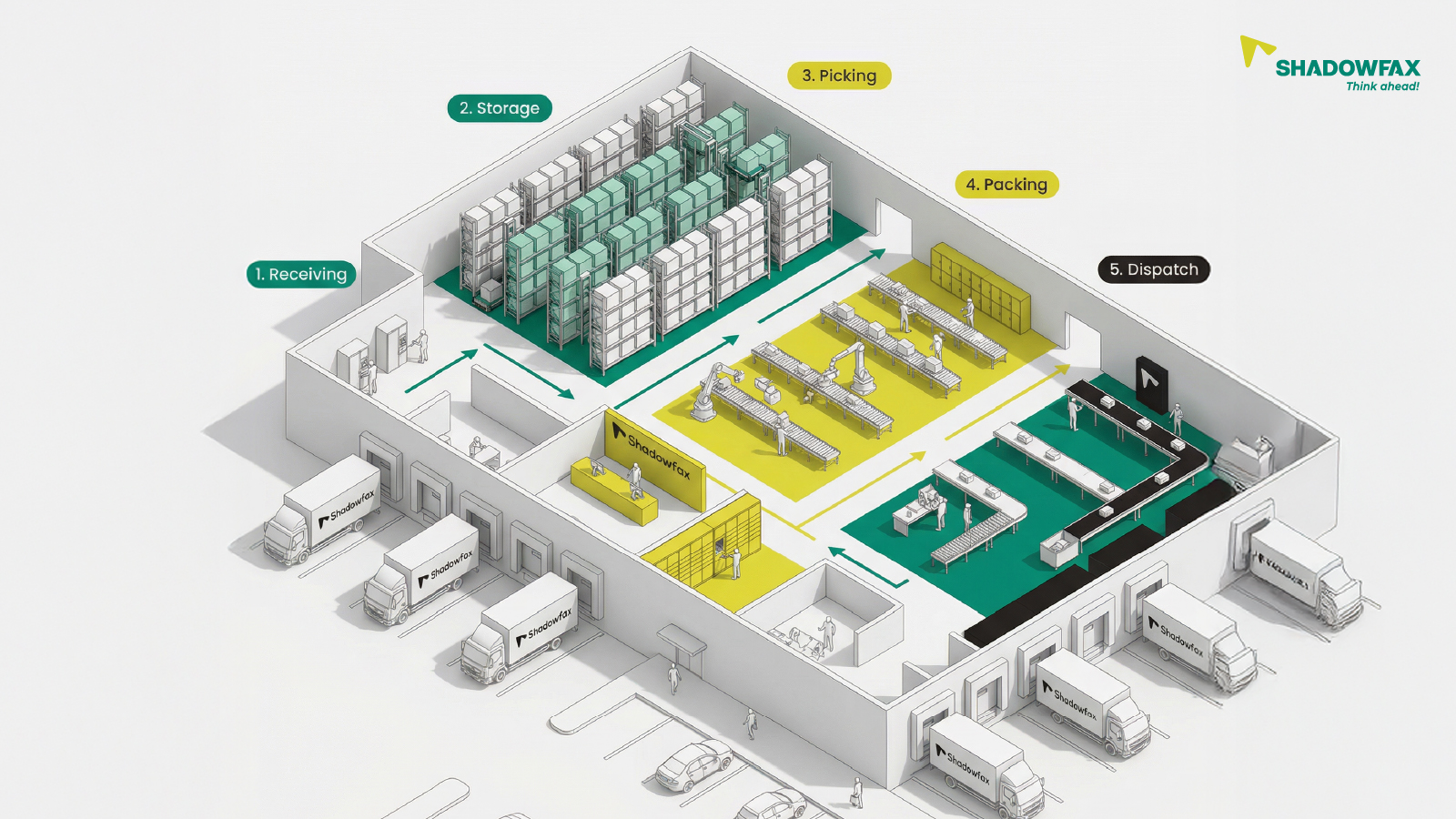


Today, customers prefer to shop online, but they demand speedy deliveries and seamless shopping experiences. Now, as businesses scale, it becomes exceedingly difficult for them to fulfill these demands. This is where micro fulfillment centers (MFCs) come into the picture.
The micro fulfillment market in India is projected to reach 2261.3 million USD in 2030 at a compound annual growth rate of 39.2%. The stats are a clear indication—retailers are switching to micro fulfillment centers. Micro fulfillment centers are helping them reduce last-mile costs, process orders faster, maintain inventory, streamline supply chains, and turn operational efficiency into a competitive advantage.
In this article, we will explore what micro fulfillment centers are and why it is such a great idea for businesses to partner with MFCs.
Micro fulfillment centers (MFCs) are highly automated storage units. Located closer to the customers, they can fulfill super-fast deliveries at reduced costs. MFCs are smaller than traditional warehouses, however, they use automation to drive higher operational efficiency.
What makes micro fulfillment centers efficient?
The micro fulfillment facilities are set up as standalone or as dedicated automated zones within a brick-and-mortar retail outlet. They are used for online order fulfillment, ship-from-store, or local pickups within a designated region/area.
Micro fulfillment centers are reshaping last-mile logistics and giving businesses a competitive advantage.
They were a necessity during the pandemic, but with rising demand for speed and convenience, MFCs have now become a trend.
Traditionally, the last-mile delivery accounts for 42 to 43 percent of the total delivery costs. This makes it both expensive and inefficient.
However, automated micro fulfillment centers have successfully mitigated this challenge. They have brought inventory closer to the customer and enabled faster order fulfillment without inflating the costs. The MFC model has turned out to be a great proposition for both businesses and consumers. With faster, cheaper, and sustainable delivery, it will retain its popularity and continue to be trendy.
There are mainly three types of micro fulfillment centers. Let us understand the differences among these three fulfillment models and the challenges that businesses must consider before investing.
Best for: Large e-commerce players, marketplaces, and high-order-volume businesses
Standalone micro fulfillment facilities are located within a few kilometers of the demand epicenter. They are spread across 3,000 to 10,000 square feet and are highly automated with selective manual processes. However, setting up a standalone facility comes with its own set of challenges, like:
Best For: Omnichannel retailers, grocery chains, and big-box stores
A lot of retailers integrate a micro fulfillment facility within their store premises, either in a backroom, basement, or stockroom. As retail stores are already close to the customers, they can offer efficient last-mile delivery. It is a prudent approach for retail chains to have an in-store micro fulfillment center. However, some challenges must be mitigated:
Best For: Quick-commerce platforms, grocery and essentials delivery players
Dark stores are similar to a supermarket with a store-aisle layout, however, they are ghost stores used only for fulfillment purposes. They are not highly optimized like the standalone MFCs; the staff is responsible for all picking, packing, and operations. The challenges of setting up a dark store include:
Micro fulfillment centers (MFCs) are highly automated facilities that enable businesses to fulfill orders quickly, accurately, and cost-effectively. A typical MFC operates through the following stages:
MFCs get products from suppliers or central warehouses. They then inspect the products for accuracy and condition and log them into the inventory management system.
Facilities store the products using automated systems like robotic shuttles and smart racking. These products are tracked using SKU-level tracking to ensure rapid retrieval.
MFCs receive orders through an order management system. A blend of robotics and human intervention enables fast picking, precise packing, and perfect labeling.
The micro fulfillment facility dispatches the packed orders to the customer. A delivery fleet member (from the in-house or third-party logistics partner team) is entrusted with the task of ensuring that last-mile delivery is quick and efficient.
MFCs decentralize inventory and streamline supply chains. This approach unlocks multiple benefits for both the e-commerce businesses and their consumers. These include:
While there are many benefits of investing in a micro fulfillment facility, it also comes with its own set of challenges. These include:
A traditional warehouse and a micro fulfillment facility both serve different fulfillment goals and have different roles in the supply chain. They are both designed for different delivery speeds, scales, and locations.
Here are some marked differences between a micro fulfillment center and a traditional warehouse:
Location:
Space:
Delivery:
Purpose:
Yes, micro warehousing is emerging as the future of e-commerce. Today, when customers expect faster and more reliable deliveries, micro warehousing enables brands to position their inventory closer to the urban demand centers. This significantly reduces last-mile delivery time and cost. When combined with automation, data-driven inventory planning, and local delivery networks, MFCs enable same-day and even sub-hour deliveries. As a result, micro warehousing is proving to be a strong competitive advantage for speed-driven categories and dense urban markets.
Micro fulfillment centers are the future of e-commerce. MFCs are located in the heart of urban demand areas, and they fulfill the expectation of faster delivery while keeping the cost under control. Retailers are adopting the micro fulfillment model to meet rising customer expectations and streamline urban logistics.
However, the location of the facility is not the only defining factor. Efficient last-mile delivery is what turns micro fulfillment into a great customer experience. Shadowfax is the most reliable and trusted fulfillment partner with a strong hyperlocal delivery network and trained delivery fleet. Shadowfax has an established presence across thousands of PIN codes across India. The company operates at scale and provides fast transit times and excellent customer experiences even during peak demand.
A micro fulfillment facility is located in proximity to urban demand hubs. It can be a highly automated standalone facility, integrated with a traditional store, or operate as a dark store. A dark store is an MFC that is not accessible to walk-in customers. It focuses only on online order fulfillment.
The cost required for setting up an MFC can vary from city to city. The total cost of MFC setup includes costs for renting land, construction, automation and robotics systems, warehouse management systems, labor, inventory, hiring a third-party delivery fleet, etc. SMBs must do a thorough cost vs benefit analysis and ROI predictions before investing
E-commerce businesses and retailers who want to speed up last-mile delivery in urban areas where demand flow is high should consider investing in MFCs.
Hash Tags :
#shadowfax #microfulfillmentcenter #MFC #logistics #onlineshopping #supplychain #warehouses #lastmiledelivery #lastmilelogistics
Related Blogs