 Back
Back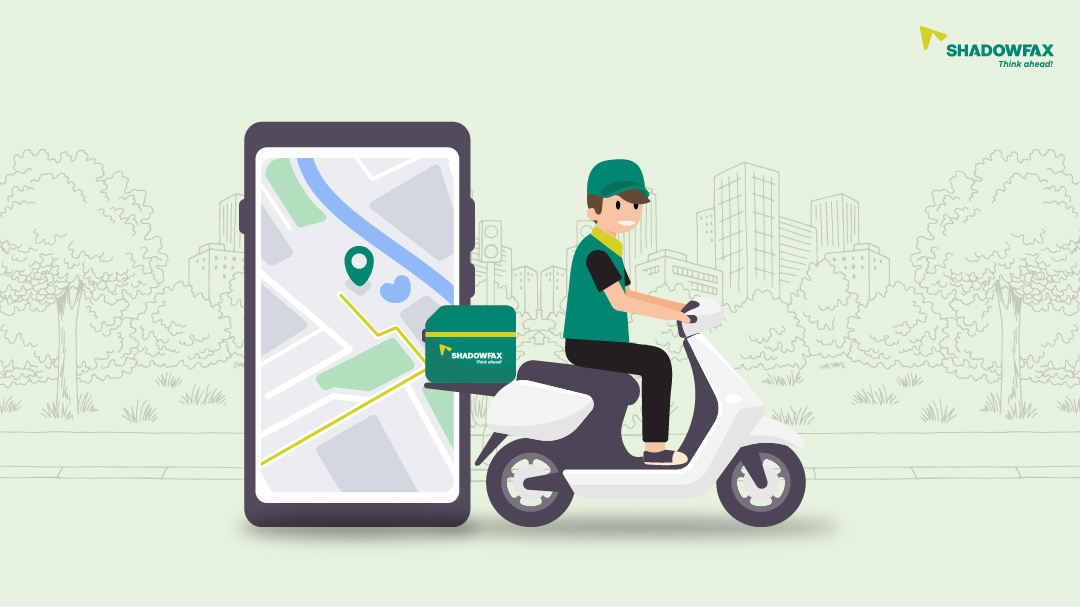


Speed has become the new standard for customer satisfaction. With online shoppers expecting products almost instantly, companies can no longer rely on 2–3 day delivery windows or worse, 10 days for remote orders.
Enter on-demand delivery. This hyperlocal approach lets brands deliver orders within hours, creating happier customers while boosting efficiency and cutting costs.
The trend is most visible in urban centers, and it’s fueling a market projected to hit $899.4 billion by 2033, led by food delivery services. But behind this rapid fulfillment is a complex network of logistics, technology, and operational planning, without which fast delivery is impossible.
This guide presents actionable insight into what on-demand delivery is, the real benefits, how the process works, major providers, and the challenges that industry players face, so you can deliver faster and smarter.
On-demand delivery is a service model in which products ordered by customers are delivered within the shortest timeframe. The best example is food or grocery items that are delivered within 30 minutes to a few hours to your doorstep. End users are free to choose their delivery preferences based on their own requirements.
The goal of on-demand delivery logistics is to prioritize customer convenience. Modern automation-driven dispatching and delivery scheduling technology supports this procedure. Industry surveys also indicate nearly 80% of buyers now expect retailers to offer same-day delivery, with 30% expecting it at no extra charge.
On-demand delivery brings the products you want right to your doorstep- fast, easy, and hassle-free. But behind this convenience lies a well-orchestrated strategy. Let’s take a peek at how the process works.
The very first step is where the customer places an order using the mobile app. Be it food, groceries, medicine, or any retail product. The customer chooses the delivery timing and location.
The fulfillment center or the warehouse of the delivery company receives the order. The automated system then evaluates the stock availability and agents to deliver. The system then assigns the order using the dynamic routing and real-time dispatch algorithms.
If the product is electronic or a grocery, the fulfillment center packs the order. Similarly, if it is a food order, the cloud kitchen center packs the order for pickup. Here, packing items in minimal time is essential.
The item is picked up by a delivery agent, who then begins the journey to the customer's location. Customers using the app will get the real-time tracking update. The agent, on the other hand, gets real-time traffic routing to minimize the delay.
The customer can use the app to verify receipt of the delivery. Feedback is gathered. For ongoing improvement, the company records delivery performance measures. This helps in customizing the delivery system to make it better.
Top on-demand delivery applications like Uber Eats, Zomato, BlinkIt, and Swiggy have advanced tracking tools and fulfillment centers that make delivery easy and quick
The on-demand delivery process can benefit both customers and the service provider. Here are some of the key benefits:
For consumers, on-demand delivery can be convenient to place an order for the product that is needed urgently. Be it the grocery, stationery, or food item, consumers expect rapid delivery of the product.
Moreover, flexible choices like scheduled time slots, same-day service, and evening deliveries produce a customized experience that boosts loyalty and repeat business.
Automating the delivery process, including the route optimization and task allocation, reduces reliance on manual planning and lowers costs. Delivery cycles are shortened by automation, which also minimizes human error in order assignment and reduces fuel consumption with efficient routing.
On average, 8% of domestic first-time deliveries fail due to multiple reasons. Retailers may have to pay for redelivery, which can make this very costly. By offering consumers the option to have their items delivered to a neighbor or at a chosen time, On-Demand Delivery can help you lower your failed delivery rate.
Offering flexible, fast, and reliable delivery can differentiate a business from competitors, helping retain existing customers and attract new ones.
Fast, reliable delivery builds trust and credibility. Positive delivery experiences translate to better reviews, word-of-mouth referrals, and higher brand loyalty.
With faster delivery cycles, businesses can adopt leaner inventory practices, reducing storage costs and minimizing stock obsolescence.
The on-demand delivery and the last-mile delivery are witnessing solid growth in the market in recent times. Consumers now have multiple app options for fast delivery. The best example is the food delivery market, which is also the fastest-growing one. According to data, the food delivery segment in Asia will reach $988.80 billion by 2029.
The market of on-demand delivery is surging constantly, and so is the list of companies and industries. From pharma to food and grocery, many companies are offering on-demand delivery services. Here is the list:
Some leading players have adopted the on-demand delivery service by investing in automated tools and inventory storage infrastructure.
Shadowfax is a leader in tech-enabled on-demand delivery services. Its network enables ultra-fast grocery delivery in as little as 10 minutes, as well as 60-minute food and pharma deliveries, earning a strong reputation for instant fulfillment. With over 50% share of India’s 3PL volumes, it operates at scale across hyperlocal and on-demand delivery networks. With an AI-driven logistics platform that powers real-time tracking, optimized routing, and fraud prevention tools, Shadowfax ensures efficient, transparent deliveries across the country.
Delhivery is an integrated logistics provider that has expanded into on-demand intracity deliveries in select cities. Its intracity service supports quick deliveries for small parcels using two-wheelers, along with three- and four-wheelers for larger or bulk shipments.
Dunzo is an on-demand delivery platform that caters to everyday needs such as food, groceries, and medicines. It connects users with nearby stores and delivery partners to enable short-distance, same-day deliveries across urban areas.
FedEx is yet another global leader in offering same-day delivery along with its regular delivery services. No matter which location you want to send or receive your package, FedEx tries to deliver it on time.
Blue Dart is a popular courier and logistics company that provides parcel delivery services across India. It supports domestic and international shipments and works with businesses for document and package movement.
The on-demand delivery service model, when handled wrongly, can damage the business’s reputation. Understanding the challenges it presents helps companies strategize effectively. Here are some common obstacles:
In India, on-demand delivery has matured into an essential market driven by rising consumer expectations for speed and reliability. Technology advances and strong logistics networks continue to shift the benchmarks for fast, flexible fulfillment. Using the right delivery solutions, brands can now balance cost-efficiency with excellent customer service and scale up effectively.
Shadowfax is recognized as a leader in on-demand delivery services, partnering with top brands and SMEs to offer quick and dependable service. From personal courier to e-commerce and hyperlocal delivery service, Shadowfax helps partners to scale their business and stay ahead in the market. Its platform uses AI-driven mapping and real-time tracking to optimize delivery routes, reduce errors, and ensure ultra-fast fulfillment (such as grocery delivery within 10 minutes and food or pharma delivery in 30–60 minutes).
With India's largest crowdsourced logistics network, automated dispatch systems, and innovative solutions like Flash and Shadowfax, Shadowfax empowers businesses to expand their reach, improve delivery accuracy, and keep customers satisfied, helping brands scale and stay competitive in the dynamic on-demand market.
Hash Tags :
#shadowfax #ondemanddelivery #fastdelivery #logistics #supplychain #3pl #logisticsservices #samedaydelivery #nextdaydelivery #onedaydelivery
Related Blogs