 Back
Back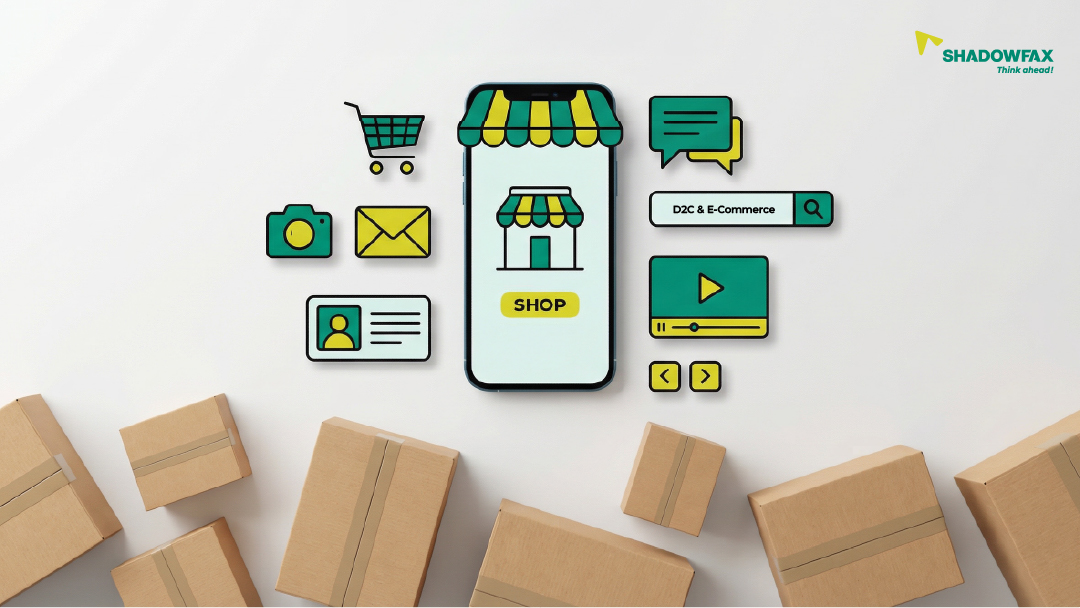


For years, brands have poured resources into great products and marketing, only to hand over their revenue, data, and customer relationships to retailers and marketplaces they cannot control. Direct-to-consumer (D2C) e-commerce changes this entirely, enabling brands to sell directly to customers and own every part of that journey.
The shift is happening now because the conditions have never been more favorable. The post-pandemic surge in online buying, maturing payment infrastructure, and the rise of social commerce have dismantled the barriers that once made going direct difficult.
India's D2C e-commerce market is now valued at $87.5 billion in 2025 and is projected to reach $267 billion by 2030, growing at a robust CAGR of 40% amid rising digital adoption. This growth signals a fundamental change in how Indian consumers discover, evaluate, and purchase products, and businesses that align their strategy with this shift stand to gain significantly.
In this blog, we break down everything your business needs to know about D2C e-commerce, from how it works to how to make it work for you.
Direct-to-consumer (D2C) is a business model in which manufacturers and brands sell their products directly to end consumers, eliminating the need for intermediaries such as vendors, resellers, or retailers. Brands take full ownership of the entire commercial process, from marketing and distribution to fulfillment and post-purchase engagement.
Products are delivered to customers through the brand's proprietary channels, including its e-commerce platform, physical retail presence, and social media storefronts. This model gives businesses full visibility into consumer behavior, direct control over brand positioning, and the ability to consistently deliver a high-quality experience across every stage of the customer journey.
Here’s how selling through the old business model differs from selling directly to customers with a D2C approach.

In traditional retail, distributors and retailers absorb nearly half of the consumer price, leaving brands with limited margins and little control over pricing, placement, or customer experience. Brands also have minimal visibility into who is buying and why, and launching a new product can take 6 to 12 months due to lengthy approvals and listing processes.
D2C e-commerce changes this entirely. Brands retain full margins minus operational costs, gain complete access to valuable customer data such as purchase history and demographics, and bring new products to market within days. Most importantly, brands own the entire customer journey from discovery to post-purchase, enabling stronger pricing control, smarter decision-making, and deeper long-term customer relationships.
Direct‑to‑Consumer (D2C) e‑commerce offers brands a powerful set of advantages that go beyond profitability, reshaping how they connect with customers and control their growth. Here are some of the key benefits:
Traditional retail channels erode profitability through distributor discounts and retailer commissions. By transacting directly with end consumers, brands retain the full consumer price minus operational costs, resulting in stronger margins and complete authority over pricing strategy.
Direct access to purchase history, browsing behavior, and consumer demographics enables more precise targeting, personalized engagement, and data-driven decision-making. Brands that effectively leverage these insights are better positioned to anticipate demand, reduce churn, and develop offerings that consistently resonate with their audience.
Every customer touchpoint in a D2C model is owned and managed by the brand. The digital storefront, packaging, post-purchase communication, and customer service collectively reinforce brand identity, converting first-time buyers into long-term advocates at a significantly higher rate than on third-party marketplaces.
Selling directly to consumers enables brands to launch new offerings, capture real-time feedback, and iterate more quickly and with lower financial exposure. This operational agility compresses the innovation cycle and supports more informed, responsive product development.
Direct digital commerce eliminates the geographical constraints of traditional retail, enabling brands to reach consumers across any market without dependence on distribution agreements or physical shelf space. This scalability allows businesses to identify new opportunities, serve a broader audience, and expand on their own terms.
While D2C offers significant advantages, building a sustainable operation requires strategic expertise across logistics, marketing, and customer management.
Customers today expect fast delivery, seamless tracking, and simple returns as standard. Meeting these expectations requires a dependable logistics network that can scale across regions. Without it, even strong brands risk damaging customer trust through inconsistent delivery experiences.
D2C brands frequently compete with established retailers that have greater market reach and deeper operational experience. Carving out a differentiated position requires a clear value proposition, a strong understanding of the target audience, and the ability to deliver an experience that third-party retail cannot match.
Paid media remains a powerful growth driver, but rising costs often mean early acquisition spend exceeds order value. Brands focused on sustainable growth balance paid efforts with organic channels such as search, content, and referrals, while strengthening repeat purchases to increase customer lifetime value over time.
High return rates and cash-on-delivery orders present a significant operational and financial challenge in India. Every return adds cost through double shipping and processing, directly impacting margins, which is why leading brands invest in return prediction capabilities, prepaid incentive programs, and efficient reverse logistics processes that minimize revenue leakage while maintaining a positive customer experience.
A functioning D2C operation depends on multiple systems working seamlessly together, from the website and payment gateway to inventory management, CRM, and the returns portal. Building and maintaining this technology stack demands significant time and resources, making it particularly challenging for early-stage brands with lean teams.
The most successful D2C brands are built on focused execution rather than expansion. Clearly identifying a specific customer, addressing a defined problem, and presenting a compelling reason to choose your brand over marketplace competitors forms the foundation of a sustainable D2C strategy that drives stronger positioning, sharper recall, and more efficient marketing spend.
A seamless buying experience is non-negotiable in D2C. Brands need a fast, flexible e-commerce platform that efficiently manages inventory, orders, and analytics across channels, giving businesses the operational visibility needed to make informed decisions and scale with confidence.
Email, SEO, WhatsApp, and organic social media demand time and consistency more than heavy budgets, yet they generate long-term returns that paid channels cannot always sustain. Brands that prioritize building owned audiences are less vulnerable to rising acquisition costs and algorithmic shifts, creating a more resilient, cost-efficient growth engine over time.
Customer acquisition is expensive, and the first sale rarely breaks even. Profitability in D2C is driven by repeat purchases, which is why loyalty programs, replenishment reminders, and subscription options for consumable products are proven strategies that increase customer lifetime value and significantly improve the return on acquisition investment.
Partnering with a reliable third-party logistics provider is critical for scaling a D2C business. Managing deliveries in-house can quickly become costly and operationally complex as order volumes grow. By working with an experienced D2C logistics partner, brands can streamline shipping, accelerate deliveries, and ensure a consistent customer experience while staying focused on product innovation and growth.
For D2C brands, every delivery is an opportunity to strengthen customer trust. That is why choosing the right D2C delivery partner is one of the most substantial decisions for business owners. Shadowfax is built specifically for D2C brands that need speed, scale, and reliability.
Some of India's most recognized D2C organizations include Mamaearth in skincare, boAt in electronics, Sugar Cosmetics in beauty, Lenskart in eyewear, and Wakefit in furniture, each achieving significant market scale by transacting directly with end consumers and eliminating traditional retail distribution.
Beauty and personal care, health and wellness, food and beverages, fashion, and electronics represent the highest D2C adoption in India. Categories driven by education, personalization, or strong brand affinity are particularly well-positioned for the direct engagement model.
B2C encompasses all commercial transactions between a business and its end consumers, irrespective of the channel involved. D2C is a defined subset of B2C where the brand transacts directly with consumers, bypassing third-party retailers and distributors entirely.
Hash Tags :
#shadowfax #d2c #ecommerce #ecommerceandd2c #logistics #directtocustomers #d2cecommercemarket #3pl
Related Blogs