 Back
Back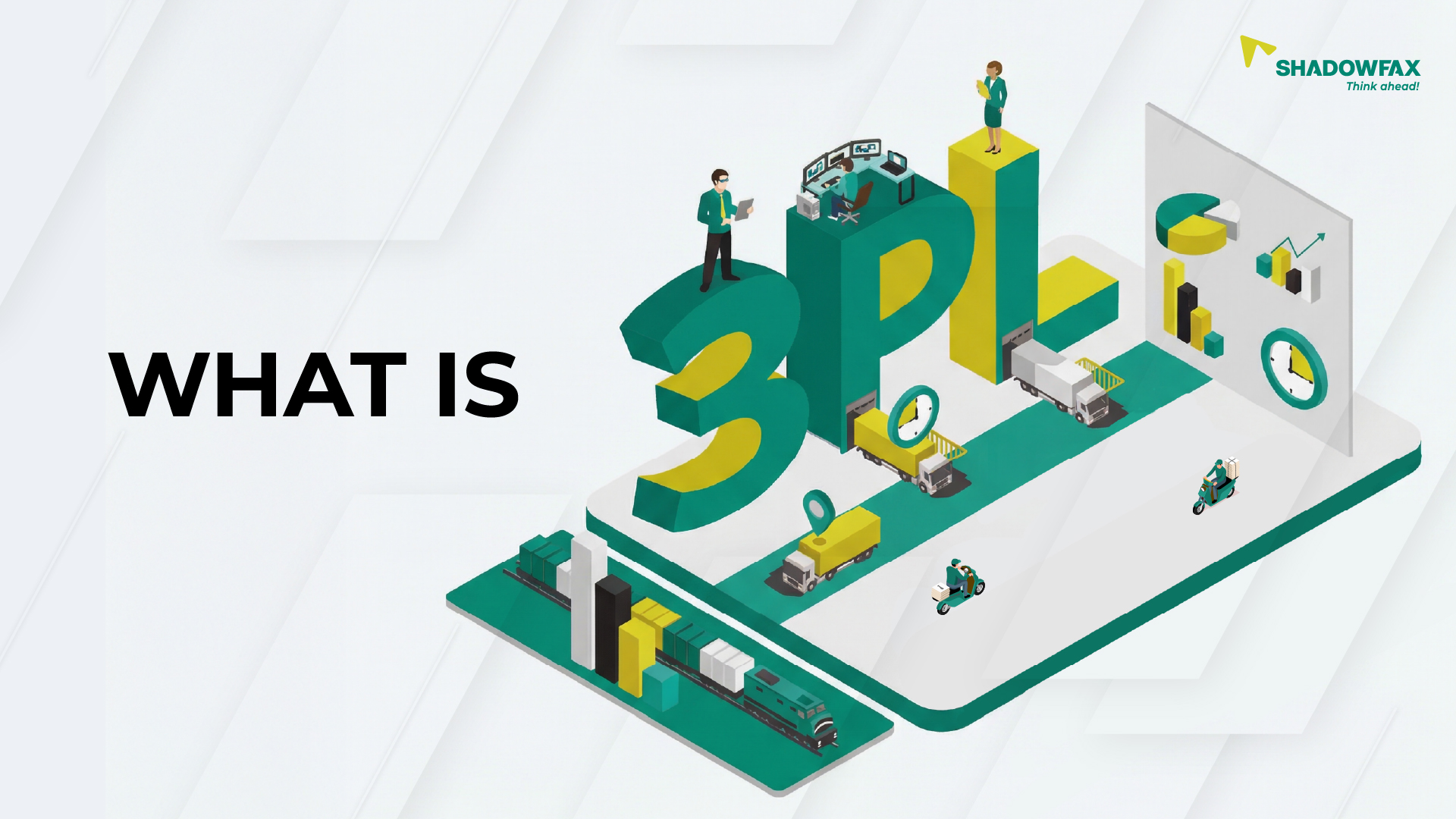


A third-party logistics (3PL) provider helps businesses expand their reach in a rapidly growing marketplace. A 3PL provider offers wider reach, operational agility, and sustained growth without the need to invest in local teams and infrastructure.
Businesses with in-house teams for logistics and order fulfillment find it very difficult to manage the complexity of these operations as they grow. This is where a third-party logistics provider comes into the picture. Businesses can outsource logistics and order fulfillment to a third-party provider, allowing them to focus all their time and energy on growing their business.
In this article, we will understand how 3PL service providers operate. We will also know how they help businesses streamline supply chain and logistics operations.
3PL stands for third-party logistics. A 3PL service provider manages logistics, supply chains, and order fulfillment services for businesses.
3PL services include:
All these services are extremely important in getting the right order delivered to the right customer on time (as expected). Businesses can outsource teams to handle these responsibilities and position themselves for growth.
3PL service providers often specialize in all or some parts of the logistics operations and supply chain management. They are categorized based on their specialization and the range of services they provide. These categories include:
Suitable for: Storage, inventory management, and order fulfillment requirements without owning warehouses.
Warehouse-based 3PLs are the operational backbone between manufacturers, brands, and the end-user. They provide secure storage for goods and manage stock accuracy and movement.
3PL Partner Capabilities:
Suitable for: Efficient freight movement, carrier management, and last-mile delivery.
Transportation-based third-party logistics providers transport inventory between locations. They include parcel carriers that handle transport through air freight, rail, road, and sea routes.
Types of transportation-based 3PLs include
Suitable for: Businesses seeking cost control, billing accuracy, visibility, and logistics analytics.
Financial and information-based 3PLs specialize in freight payment and inventory management using advanced management software. They act as the brain of the supply chain.
Suitable for: End-to-end logistics operations management for e-commerce and omnichannel brands.
A full-service 3PL provider manages end-to-end logistics operations. The provider has a large network of fulfillment centers and can deliver orders at the right time to the right place.
The full set of services that a 3PL provider offers includes:

Third-party logistics partners act as an extension of a retail or distribution business’s supply chain. They manage movement, storage, and fulfillment on its behalf.
A 3PL’s operations include the following key functions:
A third-party logistics provider connects with the client’s systems using APIs or software integrations. This enables real-time visibility and allows both the client and the 3PL provider to track orders, inventory, and deliveries.
3PLs receive, store, track, and organize products efficiently. They provide inventory management and monitoring to prevent stockouts or overstocking.
The third party manages picking, packing, and labeling orders. They quality check all products based on service-level agreements (SLAs) and ensure that orders are accurate and dispatched on time.
The next step of third-party logistics is managing carrier selection, routing, and last-mile delivery. It is the responsibility of 3PLs to ensure that delivery is cost-effective and fulfilled on time.
Product return or replacement requests are also managed by 3PL players. They receive, inspect, and restock. If needed, they dispose of damaged products while minimizing losses and improving customer satisfaction.
This includes additional services like kitting customization, packaging, labelling, and quality checks for specific business or market needs.
Choosing the right 3PL service provider brings various benefits to the business. These include:
Businesses use 3PL providers’ warehouses, transport capabilities, and delivery networks. This reduces the upfront cost of buying or renting warehouses, hiring a delivery fleet, enabling quick last-mile delivery, etc. 3PL’s flexible pay-as-you-grow model supports cost efficiency.
Businesses gain access to advanced technology such as data analytics and transport management systems without heavy investment. 3PLs also bring deep expertise in compliance and regulations.
Proximity-based distribution networks, optimized transport routes, and experienced last-mile partners—these capabilities allow 3PLs to process orders faster and consistently meet delivery SLAs, thus improving delivery performance.
A 3PL partner uses diversified networks, proven processes, and has the experience to handle unexpected situations with ease. This helps reduce supply chain risk and allows businesses to respond faster to disruptions and avoid single-point failures.
3PLs use established processes, dedicated facilities, and technology to manage doorstep quality checks, quick refunds, and hassle-free exchanges. This makes reverse logistics for e-commerce businesses simple and stress-free.
3PLs enable businesses to scale operations quickly by flexing warehouse space, manpower, and transportation capacity during demand spikes without long-term infrastructure investments.
We discussed how choosing the right 3PL provider brings a host of benefits and helps businesses grow. But how to choose a 3PL partner that adds value to your business? What factors should to consider and what due diligence is necessary before you hire a third-party logistics provider? Let’s understand.
It is important to look at the track record of the service provider before you sign on the dotted line. Do they have the required experience and expertise in your industry niche? What is their core competency? Are they serving any businesses that are similar to yours? The service providers' market reputation is very important. List out your specific requirements and analyze if the provider has the expertise and the infrastructure to fulfill them.
Ask what technology stack and level of automation the 3PL uses before partnering. Make sure that they implement robust logistics management tools, warehouse management software, and real-time tracking tools that enable visibility, accuracy, and scalability.
Does the cost of hiring a 3PL partner fit within your budget and deliver clear value when weighed against the benefits it offers? The answer should be yes! Make sure that the pricing is fair and transparent. Get a clear understanding of setup fees, per-unit charges, storage costs, and any variable or seasonal surcharges.
Assess the geographic reach and distribution of warehouse facilities. Do they align with your customer locations, support efficient delivery times, and lower transportation costs? This has a direct impact on order fulfillment, customer satisfaction, and, hence, business growth.
Hands-on customer service, support, and communication are extremely important for disruption-free, smooth operations. Choose a 3PL that offers real-time visibility into orders and inventory, proactive issue resolution, and consistent alignment with your service expectations.
Shadowfax enables same-day and next-day delivery through a network of 100+ micro-fulfillment centers (MFCs) across India.
This proximity-led fulfillment helps D2C brands reduce delivery timelines and significantly improve checkout-to-delivery experience, leading to higher conversion rates.
Returns are a major challenge for e-commerce businesses. Shadowfax processes 380,000+ reverse orders daily, with over 45% of these handled as part of 3PL engagements.
This scale reflects strong operational maturity in doorstep quality checks, faster refunds, and efficient restocking, making returns simpler and less costly for brands.
For businesses operating in quick commerce and high-frequency order environments, Shadowfax handles 360,000+ orders per day during peak Q-commerce demand.
This demonstrates the ability to manage intense order volumes while maintaining delivery SLAs and service quality.
Shadowfax combines real-time tracking, AI-led route optimization, and performance analytics to ensure reliable, cost-efficient deliveries. Businesses get full visibility across orders, inventory movement, and returns, without building complex logistics tech in-house.
Hiring a 3PL provider is the best strategy if a business wants to scale and expand reach to a larger customer base without investing heavily in logistics and supply chain management. A provider who aligns with the business expectations and reduces operational burden while improving customer experience rakes in immense value and ROI.
Shadowfax is an ideal partner that excels in critical areas of 3PL. Especially for e-commerce and distribution-led businesses that prioritize fast and reliable movement of goods and products. Shadowfax has an extensive delivery reach. Their delivery partner network serves thousands of PIN codes in India. They have a matchless execution efficiency and can flawlessly handle express shipping, last-mile delivery, and returns. With doorstep quality checks, real-time tracking, and AI-led route optimization capabilities, Shadowfax is the chosen 3PL partner for businesses that need flexible and tech-enabled delivery without investing heavily in an in-house team.
A 3PL manages warehousing, fulfillment, logistics, and the entire supply chain on behalf of its clients while giving them full control over stocks, delivery timelines, and order management. Drop shipping, on the other hand, involves selling products without holding an inventory. In this model, the supplier ships directly to the customer.
3PL stands for third-party logistics provider, and 4PL for fourth-party logistics provider. The primary difference is that 3PL is operation-focused while 4PL is strategy-focused. A 3PL provides logistics like warehousing, transportation services, fulfillment, and returns, whereas a fourth-party logistics provider acts as a supply chain integrator and manages multiple 3PLs.
Freight forwarding is mainly focused on international and long-distance shipping. It entails arranging and managing shipments across borders and handling documentation and carrier selection. 3PL, on the other hand, covers the entire supply chain operations, including domestic and last-mile delivery.
When businesses aspire to scale rapidly but handling the complexity of logistics and order fulfillment becomes very costly, then it is the best strategy to leverage the capability of a 3PL provider. The right 3PL partner can help businesses deliver faster, reduce operational burden, and improve customer experience without heavy investments.
Hash Tags :
#shadowfax #3pl #supplychain #logistics #ecommercebusiness #ecommerce #d2c #thirdpartylogistics #3plprovider #thirdpartylogisticsprovider #fulfillmentservices #logisticsoperations #reverselogistics
Related Blogs