
 Back
Back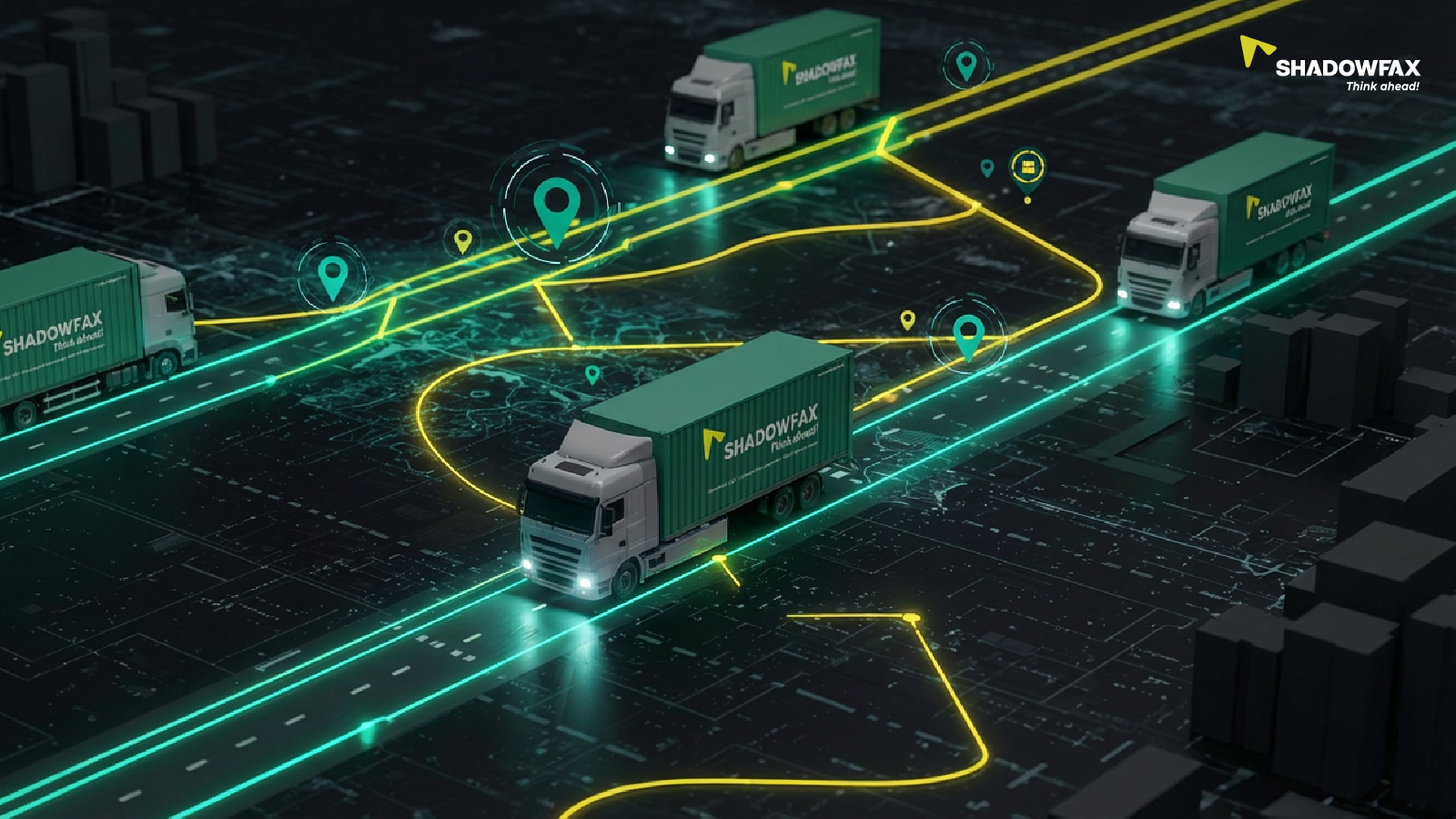


Modern logistics teams face mounting pressure to meet rising client expectations. Manual operations and disconnected systems create bottlenecks that limit scalability and reliability.
AI helps logistics leaders scale without compromising performance by automating route planning, inventory forecasting, and exception handling. Businesses maintain efficiency even as order volumes grow.
With India's e-commerce market projected to reach $550 billion by 2035, logistics providers must enhance their speed, intelligence, and flexibility to remain competitive.
This guide examines how AI is transforming logistics to enable businesses to scale faster, reduce operational costs, and deliver enhanced customer experiences.
AI in logistics uses intelligent systems to optimize routing, inventory, and demand forecasting by analyzing real-time data such as traffic, weather, and order patterns. This enables logistics teams to reduce delays, lower costs, and deliver faster, more reliable fulfillment at scale.
Companies adopting these technologies report 20-30% faster delivery times, 15-25% lower transportation expenses, and fewer failed shipments. By anticipating demand spikes, traffic disruptions, and inventory shortages, AI shifts operations from firefighting to prevention, protecting margins while improving service quality.
The modern logistics sector generates large volumes of data every second, from orders and inventory to delivery routes and customer details. AI helps analyze this data and predict future demand, allowing companies to manage inventory more effectively.
Traditional planning models struggle to respond to real-time variables, including traffic congestion, weather disruptions, and demand fluctuations.
Predictive intelligence addresses these challenges by supporting consistent service delivery, operational efficiency, and margin protection in highly competitive, high-pressure environments.
Several AI-driven trends are reshaping the logistics landscape and industry standards.
Smart routing systems leverage real-time data, including traffic conditions, weather patterns, and delivery priorities, to dynamically optimize route selection. Unlike static routing models, these systems automatically adjust to disruptions such as accidents or road closures, reducing fuel expenditures by 10-15% and delivery times by 20-25%. This increases vehicle utilization while lowering per-delivery costs and improving client service levels.
AI powers autonomous vehicles and automated sorting systems that handle repetitive logistics tasks without human intervention. These systems operate continuously with consistent accuracy, reducing labor costs and eliminating errors from fatigue. Automated warehouses process orders around the clock, boosting capacity and speeding up fulfillment during peak periods.
Audio AI enables machines to analyze and interpret sound patterns for operational insights. In logistics, this technology monitors vehicle engine sounds to detect mechanical issues before breakdowns occur, analyzes warehouse acoustics to identify equipment malfunctions, and uses voice commands for hands-free operations. This reduces unexpected downtime, prevents costly repairs, and improves driver and worker safety through fatigue detection and real-time alerts.
AI monitors social media for customer sentiment, tracks global events for supply chain risks, and analyzes environmental data to identify disruptions early. By processing these diverse signals simultaneously, AI enables companies to forecast more accurately and respond proactively to potential threats.
AI-powered computer vision analyzes camera footage to monitor warehouse operations in real time. These systems track inventory movement, identify packaging errors, verify shipment accuracy, and detect safety hazards without manual inspection. This improves inventory accuracy, reduces fulfillment errors, and enhances workplace safety.
The benefits of AI in logistics extend far beyond simple automation, delivering measurable improvements across operational dimensions.
Companies that implement intelligent optimization save millions in fuel expenses annually. Research indicates that implementing AI reduces operational costs, demonstrating a substantial return on investment.
AI-powered chatbots and virtual assistants handle customer inquiries, provide real-time shipment updates, and resolve common issues 24/7. This improves response times, ensures consistent service quality, and allows human agents to focus on complex problems, resulting in enhanced customer satisfaction and reduced support costs.
AI eliminates guesswork in inventory planning by analyzing buying patterns, seasonal demand, and market signals to determine optimal stock levels. This prevents stockouts of high-demand items while avoiding excess inventory of slower-moving products, resulting in improved cash flow, reduced storage costs, and inventory aligned with actual customer demand.
AI provides accurate delivery estimates, real-time delay notifications, and enables rapid response from logistics teams. Automated dispatch systems ensure proper package allocation to vehicles, while route optimization maintains delivery schedules. This technology significantly improves on-time delivery performance, enhancing customer satisfaction and reducing support inquiries.
AI advances sustainability objectives while reducing operational costs. Optimized routing decreases fuel consumption, strategic load planning minimizes trip frequency, and predictive maintenance extends equipment lifespan. These improvements collectively reduce carbon emissions and operating expenses, demonstrating that environmental responsibility and financial performance are mutually reinforcing.
AI is used across the logistics ecosystem in multiple ways, supporting operations throughout the entire supply chain.
Algorithms analyze traffic data, weather conditions, and delivery windows to calculate precise routes. This dynamic routing system continuously adapts, rerouting vehicles around congestion to minimize delays and fuel consumption.
AI analyzes historical sales data to identify patterns and trends. It studies market trends to predict future demand. It also considers economic signals and external factors, providing a comprehensive and accurate forecast.
IoT sensors monitor vehicles and equipment to track performance. They can spot problems before they cause breakdowns. This prevents costly downtime and helps machines last longer through effective data use.
Software determines optimal cargo configurations to maximize space utilization and reduce the number of trips.
Shadowfax follows a data-driven approach to last-mile logistics. Its AI-powered systems analyze demand patterns, optimize delivery routes, and support operational planning. These capabilities help predict peak periods, reduce delivery costs, and improve turnaround times for e-commerce and D2C brands across India.
Despite compelling benefits, AI adoption in logistics presents significant challenges.
Building AI systems can cost businesses an average of $1 million. Data preparation often exceeds the original expenditures, and annual maintenance consumes 20-50% of the original budget.
Companies are concerned about protecting customer data when using AI in logistics. Cyberattacks on supply chains are increasing. A single breach could cost millions and cause severe damage.
Older systems often don’t work well with new technology. This makes upgrades tricky and requires careful, step‑by‑step planning. Without integrating AI, logistics companies may face problems while switching to new systems.
Organizations must address these challenges through strategic planning, stakeholder engagement, and phased rollouts to maximize the benefits of AI.
AI has transformed logistics from a cost center into a strategic competitive advantage. As India's e-commerce market expands rapidly, selecting the right logistics partner determines your ability to scale efficiently while controlling costs.
As a leading logistics service provider, Shadowfax delivers innovation-driven logistics through our API-enabled platform. We leverage predictive demand forecasting, real-time route optimization, and live geo-tracking to ensure accurate, timely delivery. Our AI-driven Shadowfax Maps identifies address errors and optimizes delivery routes, reducing cancellations and ensuring on-time delivery. Meanwhile, Shadowfax Shield prevents fake orders and fraudulent returns through intelligent fraud detection, protecting operations and enhancing reliability.
Our seamless API integration connects with your existing systems, while our comprehensive reverse logistics provides complete visibility and customizable quality management. From demand forecasting to last-mile delivery, our technology infrastructure is engineered for scale and operational excellence. Partner with Shadowfax to transform logistics into a strategic growth enabler for your business.
AI can be used in supply chains for demand forecasting, route optimization, inventory management, and predictive maintenance to prevent equipment failures. Additionally, AI powers automated warehouses, enhances supplier selection, improves quality control, and enables real-time decision-making across the entire supply chain network.
The current trends in logistics are automation and AI integration, sustainable green practices with electric vehicles, and real-time tracking using IoT and blockchain technology. Companies are also focusing on last-mile delivery innovations, nearshoring strategies for supply chain resilience, and data-driven decision-making to meet evolving customer demands.
AI presents certain limitations, including high implementation costs, potential technical failures, system downtime, and concerns regarding workforce displacement.
AI helps companies track driver behavior, conserve fuel, and predict traffic. It can divert trucks in real time, load balance, and sell loads to the appropriate trucks quickly. This makes transport faster, more cost-effective, and reliable.
Most companies begin to see a return on investment from AI in logistics within 12 to 18 months. Simple applications like route optimization can show benefits within a few weeks, while more advanced use cases, such as demand forecasting, usually take 6 to 12 months to deliver consistent results.
Hash Tags :
#shadowfax #AIinlogistics #techendablelogistics #logistics #logisticsservices #supplychain #3pl #fastdelivery
Related Blogs