Back
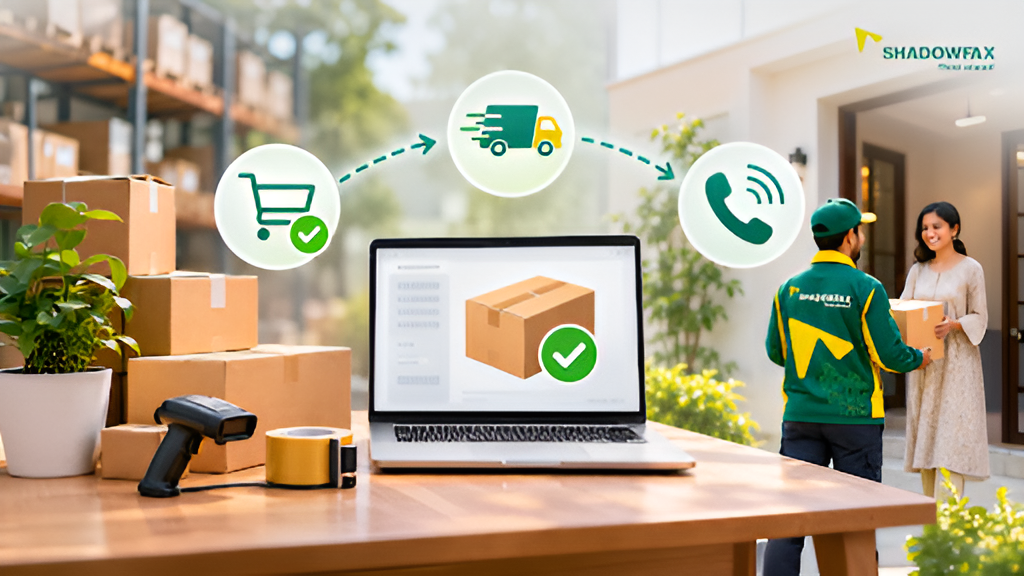


To reduce RTO in ecommerce, act at three points: when an order is placed, when it ships and after a failed delivery attempt. Verify risky COD orders before packing, choose couriers by PIN-code performance, and contact buyers quickly when an NDR comes in. These steps address common causes before a parcel returns to your warehouse.
A COD order can become an RTO long before the courier brings it back. An incomplete address may pass checkout, a high-risk order may ship without confirmation, or a buyer may miss the delivery call. By the time the parcel returns, the seller has paid for the round trip and lost the chance to recover the sale. Here is a practical process for COD-heavy D2C brands and marketplace sellers in India.
RTO means return to origin. The order left the seller’s warehouse but was not delivered, so the courier returned it. It differs from a customer return: in an RTO, the buyer never accepts the parcel; in a customer return, the buyer receives it and then sends it back.
Cash on delivery is a major driver. Figures cited by Razorpay put COD at roughly 60% to 65% of Indian ecommerce orders, with COD returns at 25% to 30%, compared with 2% to 3% for prepaid orders. D2C brands had a lower COD share, around 45% in 2026, but COD remains important outside major metros.
Rates vary by category and location. The category table below shows our benchmarks. Use them as reference points, then compare them with your own order data.
The courier's RTO fee is only part of the cost. A returned COD order costs you money in at least five places:
Add these up and Indian D2C brands lose about ₹180 to ₹350 for every COD order that comes back, according to Base.com's analysis. On a ₹600 order with a 40% gross margin, the profit is about ₹240, so a single RTO can cancel the profit on one delivered order and often part of a second.
An NDR, or non-delivery report, is raised after a failed delivery attempt. Common reasons include an unavailable buyer, an incomplete address or a refusal. An NDR is not yet an RTO: the parcel is still with the courier, and another attempt may be possible. RTO and NDR management means acting while the order can still be recovered.
Preventing an RTO before dispatch is usually cheaper than paying for a round trip. Our analysis attributes 48% to 72% of RTOs to address errors, impulse orders and fake orders. Address checks and risk-based COD verification can catch these before packing.
Require a complete address, a valid phone number and a PIN code that matches the city. Flag missing house numbers, landmarks or mismatched location details. If an order still looks incomplete, call the buyer before packing it.
Apply stronger checks to higher-risk orders rather than treating every COD buyer the same. Consider:
A first-time buyer ordering several high-value items to a PIN code with a high RTO rate deserves more scrutiny than a repeat customer placing a small order. Shadowfax 360 also offers an AI-based RTO predictor, according to its product information.
For medium-risk orders, ask the buyer to confirm by WhatsApp. For high-risk orders, call. Try to reach the buyer within an hour or two, while the order is still fresh. Hold or cancel orders that remain unconfirmed after your set review period.
In Base OMS, COD orders can be placed in a custom “Pending verification” status and moved to picking after confirmation. A custom field can record the risk tier, so the team can compare outcomes for verified and unverified orders.
Keep COD available for most buyers, but test a small prepaid discount, free shipping for prepaid orders or a partial advance on high-value COD orders. Our analysis suggests these options can shift 10% to 25% of orders to prepaid. Avoiding ₹150 to ₹300 in RTO cost can outweigh a ₹50 to ₹100 discount.
For first-time buyers in PIN codes with very high RTO, consider requiring prepayment or a small advance. This may lose some orders, but avoids paying for parcels that are unlikely to be accepted.
After confirmation, delivery speed and the courier’s first-attempt performance have the greatest influence on whether the parcel reaches the buyer.
COD buyers have not paid in advance, so a long wait can give them time to change their mind or buy elsewhere. For city orders, same-day or next-day delivery can shorten that window. As a baseline, dispatch within 24 hours of confirmation.
Shadowfax is designed for same-day and next-day city delivery through a network of local delivery partners. Shorter transit can help reduce the time between purchase and arrival.
First-attempt delivery success falls sharply outside the metros. Base.com's benchmark shows the gap:
No single courier performs best on every lane. A courier with a dense local network in one region can be weaker in the next. Look at your own delivery data by PIN code each month and send each order to the partner with the best first-attempt success for that area.
Base.com can do this automatically. Courier rules can assign orders by PIN code, weight, order value or payment type, so a COD order to one district goes to one partner and a prepaid order to another goes elsewhere. Shadowfax connects through the Base.com Shadowfax integration, which prints labels, creates manifests and sends tracking numbers back to your store or marketplace.
A buyer who knows the parcel is arriving today is much more likely to be home and to have cash ready. Send a tracking link at dispatch and a message on the morning of delivery, ideally in the buyer's language. Base.com's benchmark found that Hindi, Tamil and Telugu messages got 18% to 22% better re-delivery responses than English in non-metro areas.
Through the Shadowfax integration, Base.com can share the tracking link with the customer and trigger messages automatically as the shipment status changes.
Damaged parcels get refused. For fragile or high-value items going to tier 3 towns, use stronger packaging and tamper-evident tape. It costs a few rupees per order and saves the cost of a full round trip.
A failed first attempt is the most common way a wanted order turns into an RTO. The buyer was at work, the phone was on silent, or the delivery partner could not find the lane. Many of these buyers still want the product. What saves the order is how quickly someone reaches them.
Base.com's benchmark measured re-delivery success against how quickly the brand responded to an NDR:
Source: Base.com India Ecommerce Benchmarks
The same report estimates that moving re-delivery success from about 30% to about 65% can take a COD-heavy brand's overall RTO from roughly 35% down to 17%. That makes NDR follow-up one of the quickest ways to reduce RTO, with results usually visible within 30 to 45 days.
Each NDR comes with a reason code, and each one needs a different response:
One caution on the reason codes. Sometimes "customer not available" is recorded even though no real attempt was made. If one area or one delivery partner shows unusually high NDRs, ask the buyers what happened and raise it with the courier.
A brand shipping 1,000 COD orders a day across two couriers may receive 150 or more NDRs daily. Managing them in separate courier portals makes timely follow-up harder.
Base OMS brings shipment statuses from connected couriers into one order list, so teams can review NDRs in one queue. Automated status-based messages can reach buyers, and staff can record calls and outcomes against each order. Shadowfax 360 also offers an automated NDR workflow for rescheduling delivery attempts.
The three moments apply to every seller, but the main cause of RTO differs by category. Fix the biggest cause first.
For fashion in particular, Base.com's benchmark found that brands combining checkout size guidance, COD risk scoring and NDR follow-up cut RTO by 10 to 15 percentage points. Using only one of the three gives a much smaller gain.
A single overall RTO rate tells you there is a problem but not where it is. Break it down by the three moments, and check these numbers every week:
Compare couriers only on the same lanes. A courier that ships mostly to metros will always look better than one that ships mostly to tier 3 towns, even if it performs worse on the routes they share.
In Base.com, payment type, courier, PIN code and custom fields like verification status are stored on each order, so these numbers can be pulled from the order data without a separate spreadsheet.
Start with NDR follow-up, then add order verification, courier rules and checkout improvements.
At month-end, repeat the measurements. Keep changes that improve results and adjust the rest.
Disabling COD may deter customers, while courier complaints alone rarely solve rising RTO. Sellers that reduce RTO consistently check orders before packing, route parcels to couriers that perform well on each lane, and contact buyers quickly after a failed delivery.
You do not need a large team to start. Keep order, courier and NDR information together, then review it every week. As more tier 2 and tier 3 buyers shop online, that operating habit will become increasingly important.
RTO means return to origin. The order was shipped but not delivered, usually because the buyer refused it, was unavailable or gave an incorrect address. The courier returns the parcel to the seller.
Check addresses and confirm risky COD orders before dispatch. Ship promptly and choose couriers by PIN-code performance. When a delivery attempt fails, contact the buyer within a few hours and arrange a reattempt.
Figures cited by Razorpay put COD RTO at 25% to 30%, compared with 2% to 3% for prepaid orders. Rates vary by product category and location; fashion and footwear can be higher.
RTO charges are courier fees for returning an undelivered parcel. They may be close to the forward shipping rate. The full cost can also include forward freight, packing and handling, damage and tied-up stock. Our estimate is ₹180 to ₹350 per returned COD order.
An NDR is raised after a failed delivery attempt while the parcel is still with the courier and may be redelivered. An RTO is when the parcel is sent back to the seller. Quick NDR follow-up can help prevent an RTO.
Yes. Validate addresses, confirm higher-risk COD orders, apply risk-based rules in high-RTO PIN codes, offer prepaid incentives and follow up quickly on NDRs. These steps let you keep COD available for most buyers.
Aim to contact the buyer within six hours, and within two hours if you have automated follow-up. Our benchmark shows higher redelivery success when brands act quickly than when they rely only on courier retries.
Yes. First-attempt delivery success varies by courier and area. Compare partners on the same PIN codes and route orders to the better performer. Shadowfax may suit brands seeking same-day or next-day city delivery.
Start with NDR follow-up. It does not require checkout or warehouse changes, and our benchmark suggests brands may see results within 30 to 45 days.
Related Blogs