 Back
Back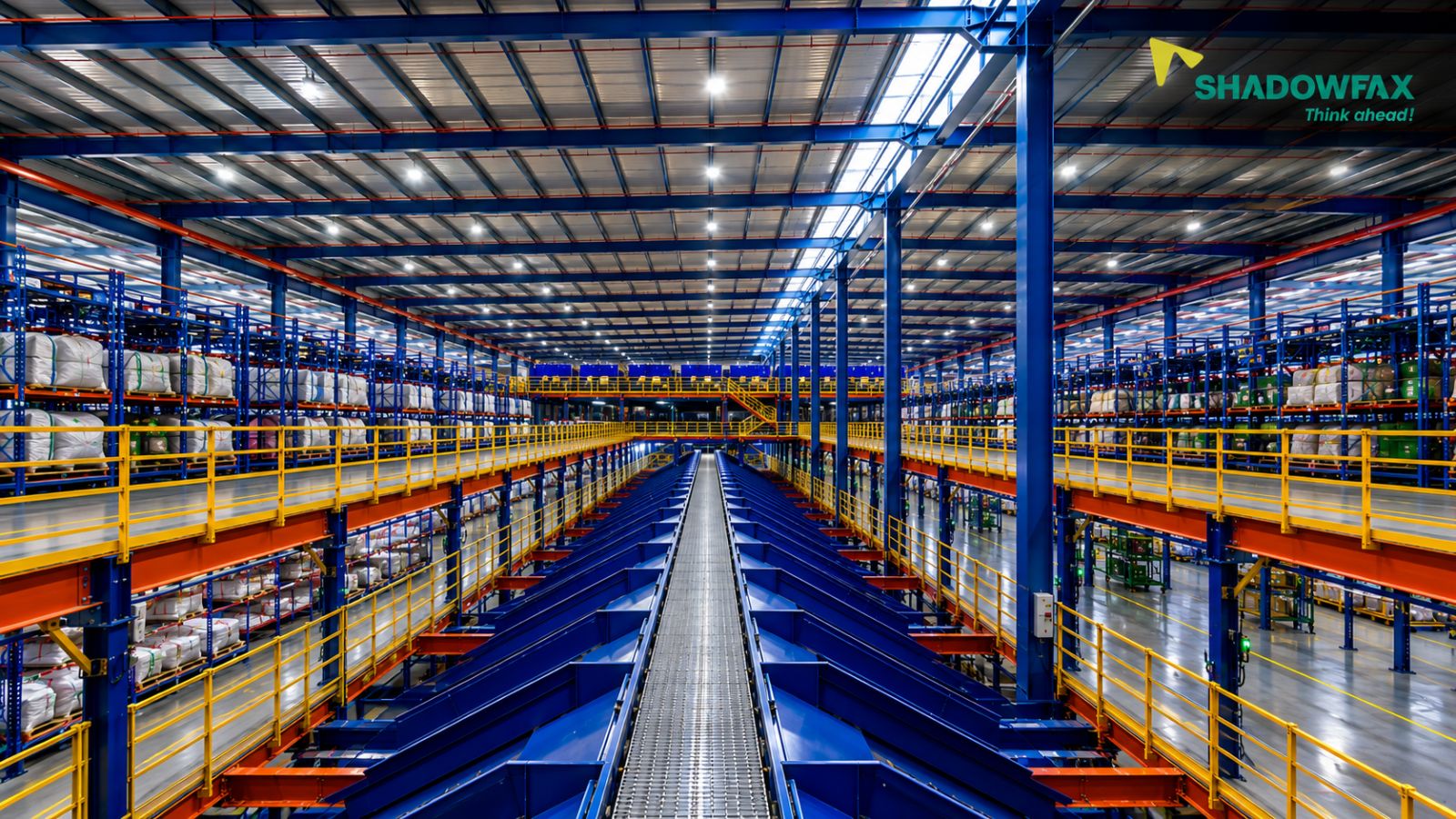


India's logistics sector is no longer a back-end function; it's a front-line competitive advantage. For supply chain managers, retail businesses, and e-commerce & D2C brands scaling across India, the quality of your logistics infrastructure directly determines how fast you grow, how much you lose to returns, and how loyal your customers stay.
Yet most businesses still treat logistics as a cost centre rather than a growth lever. The result? Delayed shipments, spiralling RTO rates, and fragmented operations stitched together across multiple vendors with no unified visibility.
This piece of content breaks down what modern logistics infrastructure actually looks like, why it matters for your supply chain, and how to evaluate the right logistics service provider for your business.
Logistics infrastructure refers to the physical and technological systems that move goods from origin to customer and back. This includes fulfilment centres, last-mile delivery networks, fleet operations, route intelligence, and the software layer that ties it all together.
For years, Indian logistics was synonymous with fragmentation: regional couriers, manual tracking, and a lack of accountability at handoff points. That's changing, and the investment data proves it.
India's logistics market is projected to cross ₹23-₹47 lakh crore by 2030, driven by e-commerce growth, quick commerce expansion, and the surge in D2C brands going direct to consumer. Supply chain managers are now expected to manage not just cost-per-shipment but also delivery speed, customer experience, and return volumes simultaneously.
The businesses winning this race are those working with third-party logistics partners who bring owned infrastructure, real-time data, and multi-service capability under one roof and who are actively investing in expanding that infrastructure for the long term.
Coverage is table stakes, but depth is what separates capable logistics partners from adequate ones. A strong infrastructure partner should cover not just metro cities but Tier 2 and Tier 3 markets where a significant share of India's next 100 million e-commerce customers live.
For D2C logistics specifically, last-mile delivery performance in smaller cities is often the bottleneck. Brands expanding beyond the top eight metros need a partner with dense PIN code coverage, local delivery partner depth, and real-time field visibility.
What to look for: PIN code coverage, dedicated last-mile infrastructure (not just aggregation), and SLA-backed delivery timelines across zones.
Shadowfax: With 15,656+ PIN code network and 2.5 million daily deliveries, Shadowfax is built on exactly this model: owned infrastructure at every tier, not rerouted capacity.
Forward logistics, the movement of goods from warehouse to customer, is where brand perception is built or broken. Customers don't distinguish between your brand and your courier. A failed delivery is a failed brand experience.
Modern logistics infrastructure optimises forward logistics through dynamic route planning, delivery attempt logic, and real-time customer communication. Some Indian logistics companies now offer same-day and next-day delivery in select geographies, with NDR (Non-Delivery Report) management tools that recover at-risk shipments before they convert to returns.
Practical example: A D2C fashion brand shipping 10,000 orders monthly can reduce delivery failures by 20–30% simply by switching from a manual NDR process to an automated one with SMS and WhatsApp-triggered re-attempt flows handled by the logistics partner.
Shadowfax: With 4.7 million+ sq ft of operational space across warehouses and sortation centres, Shadowfax's forward logistics network is built to absorb volume spikes without compromising on delivery timelines.
The logistics infrastructure layer that most businesses underinvest in is the technology layer. Visibility isn't just about tracking links; it's about operational intelligence: which PIN codes have high RTO rates, which delivery partners are underperforming, and where dwell time is accumulating in transit.
Leading third-party logistics providers now offer API-first integration with Shopify, WooCommerce, Amazon and other e-commerce platforms, giving supply chain teams a single dashboard for order management, delivery tracking, exception handling, and analytics.
What to look for: API integrations with your existing stack, real-time shipment tracking with exception alerts, RTO prediction models, and settlement dashboards with D+2 or faster payment cycles.
Shadowfax: With RTO Predictor and SF Shield, surface this intelligence automatically, flagging high-risk shipments before they leave the warehouse, nudging prepaid conversion, and verifying addresses at the point of order. The result is fewer failed deliveries, lower RTO costs, and cleaner supply chain data from day one.
Here's a metric most supply chain managers overlook when evaluating a logistics service provider: how much is the partner actually investing in physical infrastructure?
Warehousing footprint, sortation centre placement, and urban fulfilment hubs directly determine how fast your orders move and how consistently SLAs hold at scale. A partner who talks about network depth but isn't actively investing in real estate and assets is one capacity crunch away from letting your brand down.
This is increasingly a differentiator among Indian logistics companies. In a recent interview with CNBC news channel on the Q4 FY 26 discussion, the MD & CEO of Shadowfax, Abhishek Bansal, mentioned that the asset-based investment reached 4.5% of revenue last year, the highest in the company's history, with a deliberate strategy of front-loading real estate and asset planning ahead of demand. The company is targeting early double-digit EBITDA, with further expansion planned through FY28 and 110% growth in profitability projected over the next couple of years.
For supply chain managers evaluating partners, this kind of committed capital investment is a direct proxy for reliability: it signals that your logistics service provider is building infrastructure to serve your growth, not just routing your orders through borrowed capacity.
Choosing the right logistics service partner is one of the highest-leverage decisions a supply chain manager makes. Here's a practical framework:
Shadowfax is one of India's technology-first third-party logistics providers, built on owned infrastructure at scale:
For D2C brands and e-commerce businesses, Shadowfax brings together forward logistics, reverse logistics, and supply chain visibility on a single platform, Shadowfax 360. Key capabilities include RTO Predictor (AI-powered return risk scoring) and D+2 settlement cycles versus the industry standard of D+5 to D+7.
What sets Shadowfax apart at the infrastructure level is a long-term capital commitment: record asset investment at 4.5% of revenue, active real estate expansion, and a clear growth roadmap through FY28, ensuring that as your business scales, the infrastructure beneath it scales with you.
Logistics infrastructure is no longer a vendor decision made by the operations team. It's a strategic input to growth, customer retention, and unit economics. Supply chain managers and D2C brand leaders who treat it as such, investing in the right logistics service provider, building visibility into their reverse logistics flow, and optimising forward logistics SLAs will build a durable operational edge.
Logistics infrastructure refers to the physical and technological systems warehouses, last-mile networks, sortation centres, and software that move goods from seller to customer and back efficiently.
A 3PL like Shadowfax owns its delivery infrastructure across 2,500+ cities, while a shipping aggregator simply routes your orders through other couriers, meaning less control, less consistency, and no accountability at handoff.
Forward logistics is the movement of goods from warehouse to end customer; for D2C brands, it directly determines delivery speed, first-attempt success rates, and the customer experience your brand is judged by.
Reducing RTO starts with address verification at order placement, RTO risk scoring before dispatch, and automated NDR management, all capabilities built into Shadowfax's delivery platform.
Hash Tags :
#shadowfax #logistics #supplychain #logisticsinfrastructure #ecommerce #d2c #logisticsserviceprovider #lastmiledelivery #fulfillmentcenters #thirdpartylogistics
Related Blogs