Back
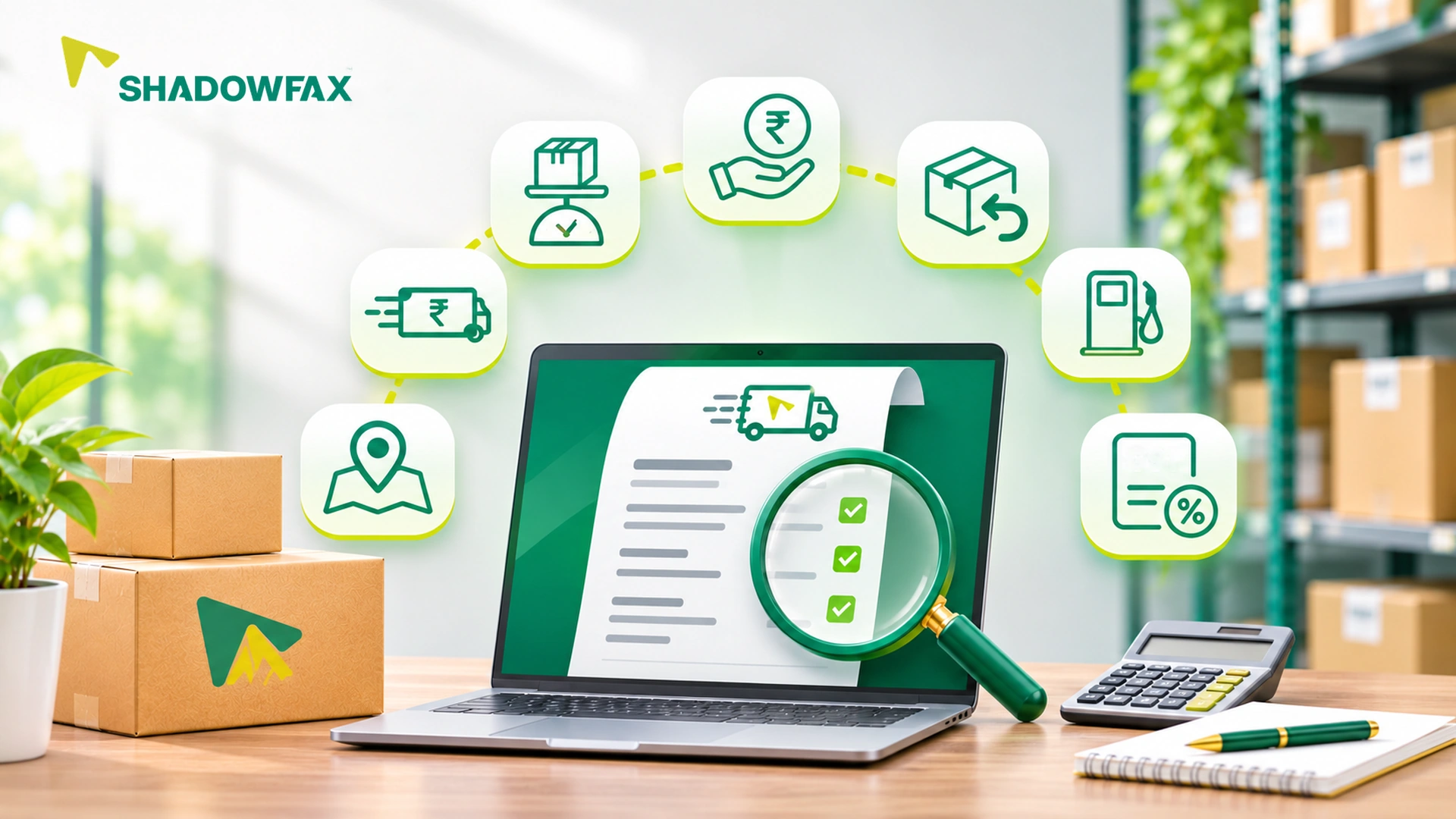


Extra courier charges usually come from weight changes, COD fees, returns (RTO), surcharges and tax. To avoid all these additional hidden charges, Shadowfax 360 is our pick: zero COD charges and no extra RTO cost.
The table below lists each charge and the proof to ask for.
Your bill goes up for one of two reasons. The courier measured something different (weight, size or PIN code), or your contract allows the extra charge. Check each line against what you booked and the rate card on that day.
For each tracking number (AWB), add the first charge, any later debits and any refunds. If the total doesn't match your quote, ask why. A higher bill isn't always wrong.
The same surcharge can be worked out differently across services and contracts, so a base-rate quote alone will not show the full bill. For why these charges move, see the factors that change ecommerce shipping charges.
Keep these together under each AWB:
To see how the quote was built, start with the original shipping-cost estimate.
Put each invoice line next to its AWB. Check that it belongs to a real shipment of yours, isn't a duplicate, and uses the right rate card. Then split it into base freight, COD, return, surcharges, platform fees and tax.
A total that is ₹40 higher tells you little. A line that says "weight changed from 0.5 kg to 1.2 kg" tells you where to look.
These figures are made up to show the method. They are not real courier rates, and they leave out tax. Your booking quote was ₹60 for forward freight. Your agreement adds a ₹10 COD fee. You expect ₹70. The invoice says ₹95.
The ₹25 could be a recorded weight change, a zone change your contract allows, or a mistake. You only know once you see the contract term and the shipment record.
Keep each query short and backed by proof:
Raise each query within the courier's dispute window. Group several AWBs in one email if they share the same cause.
If the courier refunds all or part of a charge, match the credit to the original AWB when it arrives. Count it once, as a corrected invoice line or as a wallet credit.
If the same extra charge keeps appearing, find the cause in your records: packaging, destination, delivery outcome or a contract term. Then fix it:
On Shadowfax 360, four of these lines don't appear. COD charges are zero, there's no extra RTO cost, pickup is free and there's no monthly platform fee. Shadowfax pays COD on a D+2 basis: two business days after delivery. A real weight or zone change can still apply, so match your parcels to the size and weight limits.
Shadowfax 360 is Shadowfax's shipping platform for ecommerce businesses, SMEs and D2C sellers. It runs on Shadowfax's own delivery network across 16,372+ PIN codes in 2,500+ cities, and Shadowfax delivers 98%+ of orders on time with 99.5% same-day pickups. It is also Flipkart's exclusive same-day delivery partner across Flipkart and Myntra. You pay one rate per zone, from ₹39 for eligible parcels, with no minimum order. Orders, pickups, tracking and COD sit in one dashboard. The D+2 explainer shows how the payout clock works.
Next step: check your rate on Shadowfax 360 for your usual PIN codes and box sizes. Then run the four steps above on one invoice from your current courier and one from a Shadowfax 360 pilot, and count the extra lines on each.
Weight or volumetric adjustments, COD handling, RTO freight, fuel and remote-area (ODA) surcharges, reattempt or address-correction fees, pickup or platform fees, and tax. Your service and contract decide which ones you pay.
Shadowfax 360. Four common lines don't appear: COD fees, extra RTO costs, pickup fees and a monthly platform fee.
On Shadowfax 360, COD charges are zero and RTO costs nothing extra. With other couriers, read your terms for COD handling and return freight, then compare them with the order's payment mode and delivery history.
No. It often reflects a recorded change in weight, zone or delivery outcome. Check what they recorded first, then the rate applied.
Clear photos of the sealed box on a scale and next to a measuring tape, taken before pickup.
Check your contract's payment and dispute terms. Wallet-based accounts can deduct charges automatically and refund any correction later.
Related Blogs