 Back
Back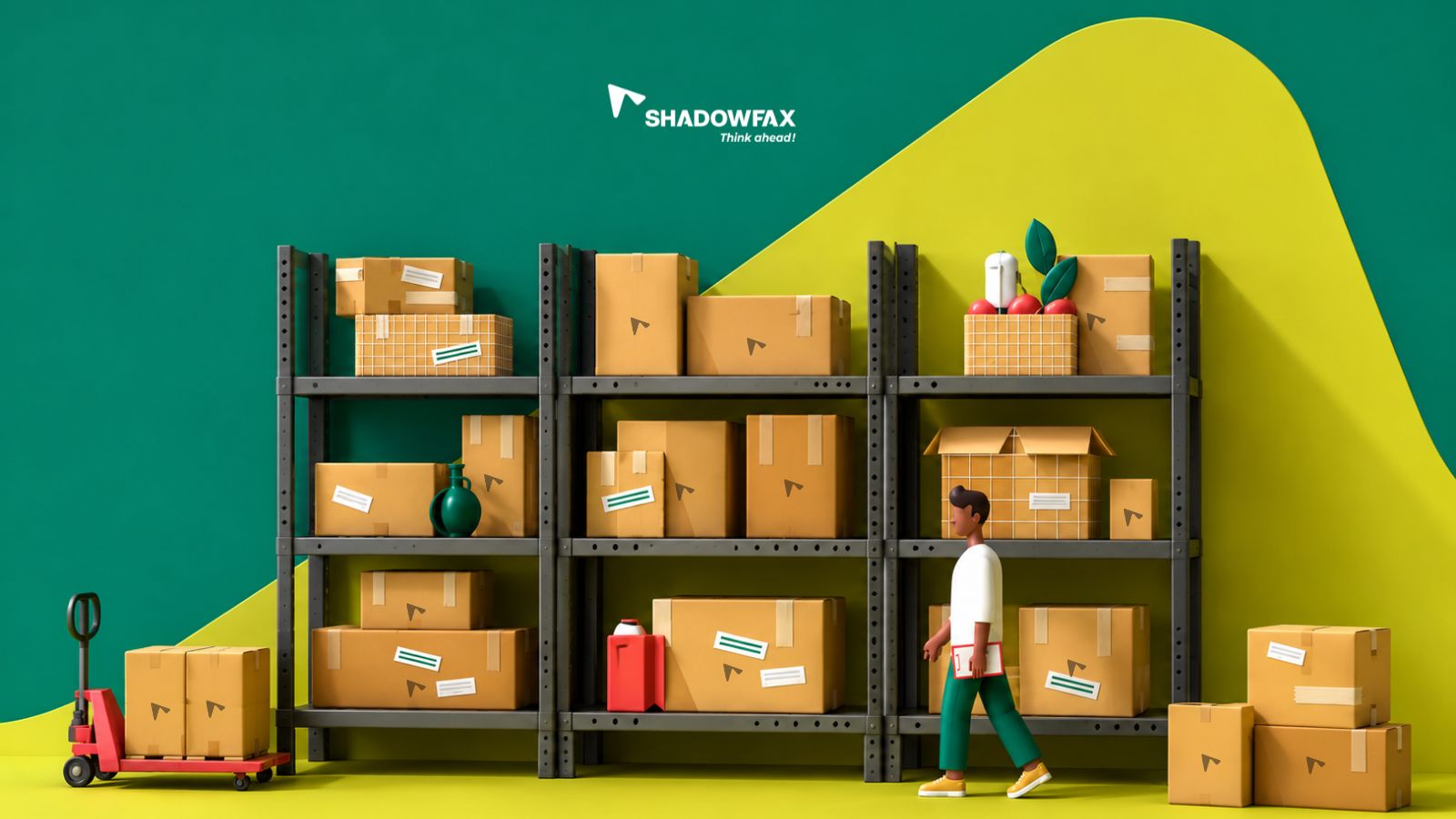


India's cities have grown impatient. The consumer who once waited days for an e-commerce delivery now expects groceries, medicines, and electronics at the door in under 10 minutes. This shift in expectations has one structural backbone: the dark store, a small, shopper-invisible micro-warehouse, typically 2,500 to 5,000 sq. ft., positioned within a few kilometres of dense urban demand.
But here's what the headlines miss: behind every 10-minute delivery promise is not just a platform; it's a logistics partner. As India's quick commerce market, valued at USD 3.65 billion in 2026 and on track to double by 2031, scales beyond what platforms can profitably manage in-house, third-party logistics providers are becoming the true infrastructure of dark store commerce. No company illustrates this more clearly than Shadowfax, India's fastest-growing 3PL, now scaling its own dark store network to 100 stores in FY27 while serving as the fulfillment backbone for vertical quick commerce platforms across the country.
Here are the major trends reshaping this space and why 3PL-powered dark store delivery is the model that wins.
India crossed 6,000 operational dark stores in 2026, with 2,000–2,500 new stores expected to open through the year. Blinkit, Swiggy Instamart, Zepto, Flipkart Minutes, and Amazon Now are all racing to build density. The logic is clear: dark-store proximity, not app speed, is the true competitive moat in quick-commerce delivery.
But more stores mean more last-mile complexity. Every new dark store opened in a tier-2 city or dense metro neighbourhood requires reliable picking, packing, and delivery operations, and building that in-house at each location is expensive, slow to break even, and operationally fragile. This is precisely the gap that 3PL providers like Shadowfax are built to fill. Shadowfax currently operates across 15,656+ PIN codes and is actively scaling its dark store network from 15 to 100 stores in FY27, targeting a 7 km delivery radius per store with 30-minute delivery timelines, the same standard the market now demands.
The quick commerce boom has a profitability problem. Several major platforms have reported widening losses as they absorb the full cost of dark store infrastructure, last-mile delivery fleets, and warehouse operations simultaneously. This is not a temporary scaling pain; it is a structural cost issue.
Shadowfax saw this coming. In its Q4 FY26 earnings call, the company made a pointed observation: "We have learned from our pilots that vertical quick commerce platforms offer significantly higher value per engagement than horizontal fulfillment. Capital is also very limited for these… We believe vertical quick commerce is going to have 3PL as the natural answer."
The data backs this up. Shadowfax already serves 6–7 vertical marketplaces through its 3PL model, all of which are profitable precisely because they outsource last-mile operations rather than build them from scratch. Meanwhile, Shadowfax itself swung to a consolidated net profit of ₹55.8 Cr in Q4 FY26 compared to a net loss of ₹9.9 Cr in the same period last year, with revenue from operations growing 73.6% year-on-year to ₹1,237 Cr. This is what the dark store business model looks like when logistics is treated as a core competency rather than an afterthought.
The benchmark has shifted permanently. What was once a 30-minute delivery promise is now a 10-minute default. India's 33 million quick commerce users have been conditioned to speed, and with user penetration still at just 1.8%, compared to China's projected 26.1%, the demand curve has barely begun to steepen.
Meeting this expectation consistently requires more than fast riders. It requires AI-powered slotting, demand forecasting, and route optimisation working in real time. Shadowfax is scaling exactly this capability, increasingly automating picking and demand forecasting across its sorting centres, which the company notes will accelerate breakeven timelines and reduce the overhead cost of expanding to new pincodes. For brands and platforms that plug into Shadowfax's network, this means 30-minute delivery capability without the capital burden of building their own operations.
Dark stores were built on groceries. In 2026, they are evolving into multi-category fulfilment hubs. Non-grocery categories, electronics, accessories, cosmetics, fashion, and medicines are growing at 1.6x the rate of food on major platforms. This isn't just an assortment shift; it's a fulfillment complexity shift. Higher-value, fragile, or regulated categories demand more precise handling, better packaging protocols, and stronger delivery accountability than a bag of onions.
This is where a professional 3PL partner becomes a qualitative advantage, not just a cost calculation. Shadowfax's 3PL infrastructure, built for reliability and scale across diverse SKU types, is particularly well-suited to the next generation of dark store commerce, where getting a skincare order or a phone accessory to the door undamaged and on time is as important as getting there in 30 minutes.
The quick commerce solutions that will win in 2027 and beyond are being built today in sorting centre automation, AI-based demand forecasting, and intelligent pincode expansion. Shadowfax is investing approximately 10% of its ₹180–190 Cr capex target this year specifically on dark store expansion, with the rest going toward the technology and infrastructure that make each store operationally viable from day one.
The broader market is also getting structural support. Government initiatives like BharatNet and ONDC are extending digital infrastructure to smaller cities, making 30-minute and 60-minute delivery economically viable in markets that were previously too costly to serve. Shadowfax's growing pincode network is up 3.2% quarter-on-quarter to 15,656+ in Q4, positioning it to be the first credible 3PL partner in these emerging markets as quick commerce expands beyond the top 10 cities.
For D2C brands: Quick commerce is no longer just a sales channel; it is a distribution infrastructure decision. Platform commissions of 18–28% are manageable when offset against the cost of building independent last-mile capability. But brands that want control over fulfilment quality, delivery speed, and cost structure should be evaluating 3PL partnerships, particularly as Shadowfax's model proves that outsourced logistics can be both faster and more profitable than in-house operations.
For vertical quick commerce platforms: The Shadowfax data is a direct signal. Platforms that lean into 3PL partnerships rather than building everything in-house are already delivering better unit economics. The capital freed from last-mile infrastructure can be redeployed into assortment, demand generation, and customer experience, the things that actually drive retention.
For investors and operators: With dark stores projected to reach a gross order value of USD 35–40 billion by 2027–28, the infrastructure layer is where durable value is being created. Shadowfax's trajectory 3PL market share growing from 8% to 27–29% in four years, now profitable, and actively building its own dark store network is the clearest signal of where the logistics opportunity lies.
India's quick commerce sector is in its most consequential phase. The 10-minute and 30-minute delivery windows that platforms are racing to deliver are not won by apps or assortments alone; they are won by the logistics infrastructure underneath. Every dark store that opens creates demand for a reliable 3PL partner. Every new city that comes online needs an operator with the pincode coverage, the AI infrastructure, and the operational discipline to make quick commerce delivery work profitably.
Shadowfax's bet on scaling its own dark stores while simultaneously powering the fulfillment operations of vertical platforms across India is a bet on being indispensable to both sides of this market. As dark store density rises and the pressure on platform economics intensifies, that positioning looks less like a thesis and more like the inevitable shape of India's quick commerce future.
A dark store is a small, shopper-facing warehouse (2,500–5,000 sq. ft.) located close to high-demand urban zones. It enables platforms to pick, pack, and dispatch orders within minutes, making 10–30-minute delivery operationally possible.
Building and operating last-mile delivery infrastructure in-house is capital-heavy and slows down profitability. 3PL partners like Shadowfax absorb that operational complexity, allowing platforms to focus on assortment and customer experience while improving unit economics.
Leading dark store operators today target 10-minute delivery in dense metros and 30-minute delivery across a 7 km radius in most urban markets, with 60-minute delivery becoming the new baseline even in tier-2 cities as dark store density grows.
AI is now central to dark store operations, powering demand forecasting, automated slotting, real-time inventory management, and route optimisation. Platforms like Shadowfax are using AI to reduce sorting centre overhead, speed up pincode expansion, and improve fulfilment accuracy at scale.
Hash Tags :
#shadowfax #darkstore #quickcommerce #hyperlocal #10minutesdelivery #30minutesdelivery #3pl #3PLpartners #quickcommercedelivery #lastmiledelivery #logistics
Related Blogs