 Back
Back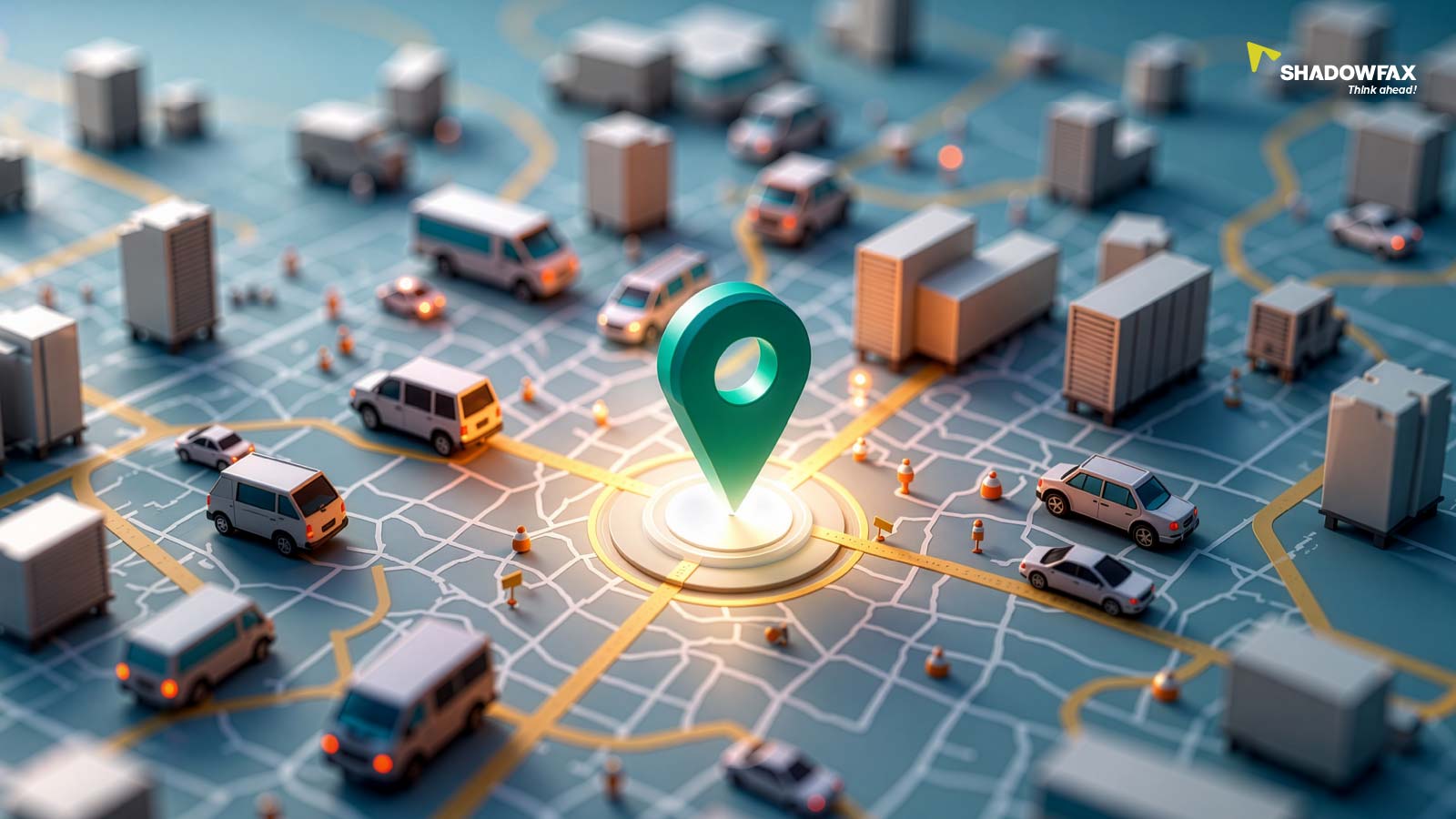


Shadowfax is the partner we built for this job. Our AI-powered mapping engine, Shadowfax Maps, detects address errors, improves geocoding accuracy, and optimises delivery routes. We then run the delivery ourselves across 16,372+ PIN codes and 2,500+ cities. A corrected PIN on a map does nothing for you unless the network behind it can book the order, send a rider to that location, and recover the shipment if the first attempt fails. In Shadowfax, the address intelligence, booking checks, routing, doorstep attempt, and failed-delivery workflow form one accountable chain. That means you can judge us on what you actually pay for: parcels delivered on the first attempt, rather than addresses scored in isolation.
A serviceability flag answers only one question: does the courier operate in this PIN code? Rural and Tier 3 orders fail for other reasons. The PIN code can be correct while the address line reads "near the panchayat office" with no house number. The locality can belong to a neighbouring PIN. The phone number can be the only reliable way to find the buyer. Our own RTO guidance names incorrect or incomplete address details, including wrong PIN codes and partial addresses, as the first common cause of return to origin. On those orders, the seller pays shipping both ways for a sale that is never completed.
That is why we treat address resolution as a delivery capability rather than a software feature. We launched Shadowfax Maps in July 2024 as an AI-based address intelligence system to reduce address-related cancellations. It runs inside our own last-mile operation.
For Tier 3 and rural markets, Shadowfax gives you AI address resolution and published network reach from a single direct 3PL. Shadowfax's network and AI capabilities span 16,372+ PIN codes, 2,500+ cities, 2.9 lakh+ quarterly delivery partners, 3,500+ trucks and 53 lakh+ sq. ft. of operational space, with SF Maps and SF Shield running across that network. Coverage and address quality only help you when they apply to the same order. So in Shadowfax, you first check each leg of the route for your account, and SF Maps then works on the address the rider will actually visit.
Courier comparisons often blur three different measures, and each answers a different question:

In our view, a large PIN-code count matters only when you can book, deliver, and manage returns on your actual routes, and our serviceability check works that way. In our developer platform, an order is serviceable only if every leg is. For a warehouse order, you check warehouse_pickup, warehouse_return, and customer_delivery. The response must also include the tier that matches your supply chain: Regular for small shipments, Surface for large ones. Coverage is configured per client account, so the same PIN code can return different tiers for different clients. Our serviceability reference explains the most common confusing rejection: the customer's PIN code checks out, but the return leg does not.
The clearest way to evaluate address resolution is to follow a single order. Below is how a rural order moves through Shadowfax. It starts with the PIN code and free-text address your customer types at checkout and ends when a failed attempt is either retried or returned. The same network handles the address and the delivery at every stage.

Two details in this flow matter most for rural volume. First, our advanced order fields exist because address strings alone are not always enough in areas with informal or inconsistent addressing. Address2 carries landmark or floor detail, and state helps with disambiguation. Second, you can correct delivery_details (contact number, address, PIN code, and coordinates) after booking, up until the shipment starts its return journey. A wrong address caught at the first failed attempt therefore does not have to become an RTO. Customers can also change the delivery address through their tracking link.
In a demo, clean addresses resolve neatly. Rural performance only shows on your hardest orders. Build your Shadowfax evaluation around the address problems in your own order book, and measure each one by its delivery outcome rather than by a match score.

Hold every logistics partner to the same metrics on the same batch. First-attempt completion and avoidable RTO are the numbers that hit your margin.
A standalone address API or an aggregator's intelligence layer can return a confident coordinate. It cannot send the rider, decide the hub assignment, or take responsibility for the failed attempt. Shadowfax is a direct 3PL with owned infrastructure. The address we resolve is the address our own network delivers to, and we are accountable for the outcome.
That difference shows up in four places:
Our customers describe the result in delivery terms. AJIO's Ashutosh Srivastava says Shadowfax has been Reliance and AJIO's partner for over eight years, "consistently delivering top performance with the lowest cancellation and RTO rates in forward logistics." Our technology work has won Innovative Application of AI (Logistics) at the i3.0 Technology Excellence Awards 2024 and Innovative Use of AI Company of the Year (Logistics) at Dine With DevOps VI 2026.
The fastest way to settle this decision is to send a representative batch of your own rural orders through Shadowfax and measure delivery outcomes on the routes you actually ship. Here is how we recommend structuring the pilot.
If you are a smaller seller, Shadowfax 360 (SF360) gives you the same network through one dashboard. You get flat-rate pricing, zero COD charges, no extra RTO costs, and D+2 COD remittance. SF360 integrates with Shopify and WooCommerce. A D2C brand can reach a direct, scaled delivery network without an aggregator in the middle.
Yes. In Shadowfax, you can update the delivery contact number, address, PIN code, and coordinates through the order update endpoint until the shipment starts its RTO or RTS journey. Once an order is delivered, returned, or cancelled, it can no longer be updated.
The order moves to a hold status that records the reason. From there, you can reopen it for another attempt, start an RTO to your warehouse, or start an RTS to the seller. Correct the address or contact before you reopen the order, so the reattempt goes to a location and number that work.
Only if your tier appears for every leg of the order. A well-formed PIN code outside the network can still return a tier list, so look for your specific tier, not just a non-empty response. Order placement re-checks serviceability and names the failing leg if one is not covered.
Our Reverse Logistics service handles pickup and processing for returns and RTO. Doorstep quality checks enable instant refunds. Nykaa says our reverse pickup performance is the fastest it has ever seen.
With Shadowfax 360, create your business profile on shadowfax360.in, recharge your wallet, and ship your first order. Start with the rural batch you most want to fix, and judge us by the delivery outcomes on that batch rather than by the coverage count.
Related Blogs