 Back
Back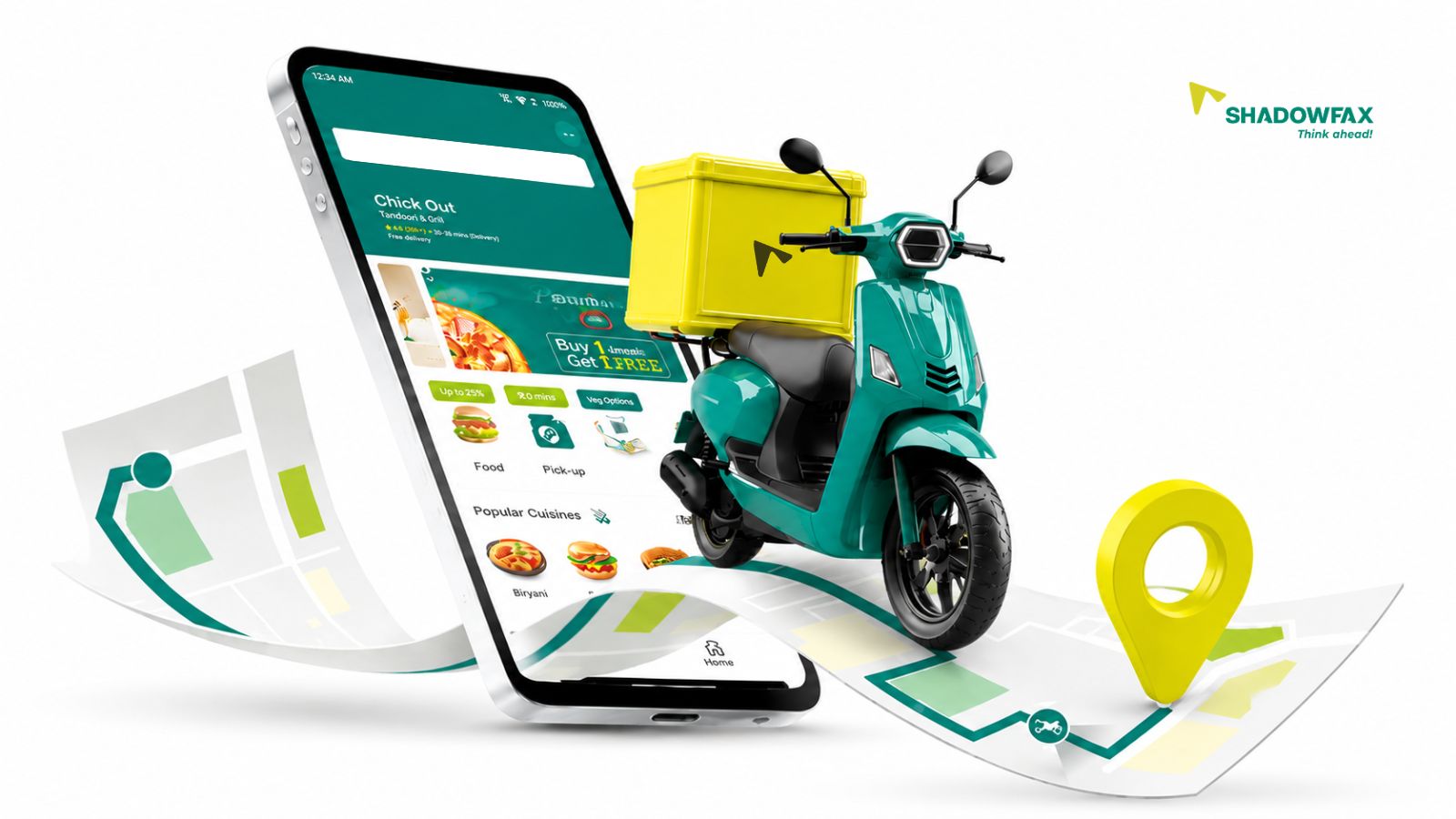


A consumer in Bengaluru orders a phone charger at 11 PM. It arrives in nine minutes. No premium. No special membership. Just the default experience on a platform that's built for it.
That's not an edge case anymore. It's the new baseline, and it's what 10-minute delivery has done to retail expectations in India. The infrastructure behind that nine-minute drop has been years in the making. The consumer behaviour that is now locked in will take decades to unravel.
Quick commerce used to be a convenience premium. You paid more for speed. That dynamic has inverted. In 2026, hyperlocal delivery is being priced into standard logistics contracts, integrated into D2C fulfilment stacks, and expanding aggressively into Tier 2 cities.
The market data confirms the shift isn't slowing. India's quick commerce sector is projected to cross $9 billion in GMV by end-2026, up from $3.3 billion in 2023, a near 3x expansion in three years. Shadowfax's own hyperlocal business crossed ₹792 Cr in revenue for FY26, a 54% jump over the previous year, across 4,778+ touchpoints and 15,656 PIN codes. That's not just growth; it's distribution at a scale that most platforms can't replicate.
Here are five trends defining where hyperlocal delivery goes from here.
The expectation for most markets at this stage of growth is deceleration, early adopters plateau, and growth normalises. That's not what's happening in Indian hyperlocal delivery.
Shadowfax processed 4.2 crore hyperlocal orders in Q4 FY26, up from 3.2 Cr in Q4 FY25 (30% YoY) and 3.5–3.6 Cr in Q3 FY26 (18% QoQ). Sequential growth is accelerating alongside annual growth, indicating that demand expansion is still broadening rather than just deepening within existing user cohorts.
For brands, this means the hyperlocal channel is past the early-adopter phase. This is a mainstream fulfilment track, and the window to establish distribution positioning before the market consolidates is closing.
Groceries opened the quick commerce channel. But their share of hyperlocal GMV has dropped from ~78% in 2023 to under 60% in 2026 as electronics accessories, OTC pharma, personal care, fashion, and pet supplies scale rapidly.
Blinkit's non-grocery GMV crossed 30% in early 2025. Zepto launched a dedicated fashion vertical. The consumer behaviour shift underneath this: people no longer segment "what I order fast" from "what I order online." Speed is simply the default expectation applied to every category.
For D2C brands, this is a distribution unlock. If your product doesn't require complex assembly, temperature control, or a large storage footprint, it is a hyperlocal candidate and the infrastructure to support it already exists at scale.
A 10-minute delivery SLA is only as credible as the infrastructure behind it. The logistics partners winning on fast delivery aren't the ones with the fastest bikes; they're the ones with the densest touchpoint network closest to demand.
India had approximately 1,200 operational dark stores at the start of 2024. By mid-2026, estimates put that number above 3,500, with Tier 2 cities like Lucknow, Indore, Coimbatore, and Surat absorbing a significant share of new openings. Average catchment radius has compressed from 3–4 km to under 2 km in high-density urban zones.
Shadowfax operates across 4,778+ touchpoints as of Q4 FY26, a 20.5% increase year-over-year, with logistics infrastructure now spanning 15,656 PIN codes. On-time delivery performance scales directly with touchpoint density; brands routing through distributed networks consistently outperform those relying on centralised fulfilment by 12–16 percentage points on delivery SLA adherence.
The financial trajectory of hyperlocal delivery has crossed the inflection point. This is no longer a segment platform; it's a revenue engine.
Shadowfax's hyperlocal revenue reached ₹232 Cr in Q4 FY26 up 32% year-over-year from ₹176 Cr in Q4 FY25, and up 16% sequentially from ₹200 Cr in Q3 FY26. For the full year FY26, hyperlocal revenue totalled ₹792 Cr, growing 54% over FY25.
This growth is happening alongside profitability improvement at the company level. Shadowfax posted ₹56 Cr PAT in Q4 FY26 at a 4.5% margin, and ₹58 Cr Adj. EBITDA at a 4.7% margin, a 400 bps year-over-year expansion. The ability to scale hyperlocal volume while improving margins is the structural signal that the unit economics of fast delivery are maturing.
The most overlooked business case for hyperlocal investment isn't top-of-funnel; it's retention. Consumers who receive their first order in under 15 minutes show significantly higher repeat purchase rates within 30 days compared to those on next-day fulfilment tracks.
The implication for D2C brands: the cost of enabling fast delivery, dark store placement, carrier network, route intelligence is increasingly offset by lower reacquisition costs. Brands on hyperlocal networks also report lower effective return rates, as faster delivery compresses the gap between purchase intent and product experience. That compression reduces impulse cancellations and "buyer's remorse," two of the highest-cost events in e-commerce operations.
If you're a D2C brand or e-commerce operator evaluating hyperlocal readiness, three decisions define your position:
Inventory placement: Are your SKUs within 2 km of your highest-density demand clusters? If not, you're paying for last-mile speed on a long-haul supply chain, and the SLA will show it.
Carrier selection: Your logistics partner's touchpoint density, real-time routing capability, and on-time delivery track record determine whether your 10-minute promise holds at 11 PM on a rainy Tuesday. Shadowfax's network of 2.6 lakh active delivery partners and 3,500+ trucks operating daily is built for exactly that consistency.
Returns infrastructure. Fast forward delivery without fast reverse logistics is an incomplete model. Hyperlocal-capable platforms that support same-day or next-day RTO processing are where D2C brands are consolidating their fulfilment.
Shadowfax operates across 2,500+ cities and 15,656+ PIN codes. The hyperlocal infrastructure is live, scaled, and delivering 4.2 crore orders per quarter and growing.
By 2027, 10-minute delivery will be table stakes in India's top 30 cities. The next frontier is Tier 2 expansion, category diversification into high-value SKUs, and the integration of hyperlocal fulfilment with social commerce and conversational retail.
The brands building hyperlocal distribution now are building the fulfilment infrastructure for what Indian retail looks like in three years. The market isn't waiting.
10-minute delivery is a hyperlocal fulfilment model where orders are picked from a nearby dark store and dispatched to the customer within a 2 km radius, typically in under 10–15 minutes.
No. While groceries led adoption, fast delivery now covers electronics accessories, OTC medicine, personal care, fashion, and pet supplies across major Indian cities.
It reduces the gap between purchase intent and product experience, which lowers return rates, improves repeat purchase rates, and cuts long-term customer reacquisition costs.
Metro cities like Bengaluru, Mumbai, Delhi, and Hyderabad are fully served; Tier 2 cities including Lucknow, Indore, Coimbatore, and Surat are seeing rapid dark store expansion through 2026.
Hash Tags :
#shadowfax #10minutedelivery #quickcommerce #hyperlocal ##hyperlocalcommerce
Related Blogs